

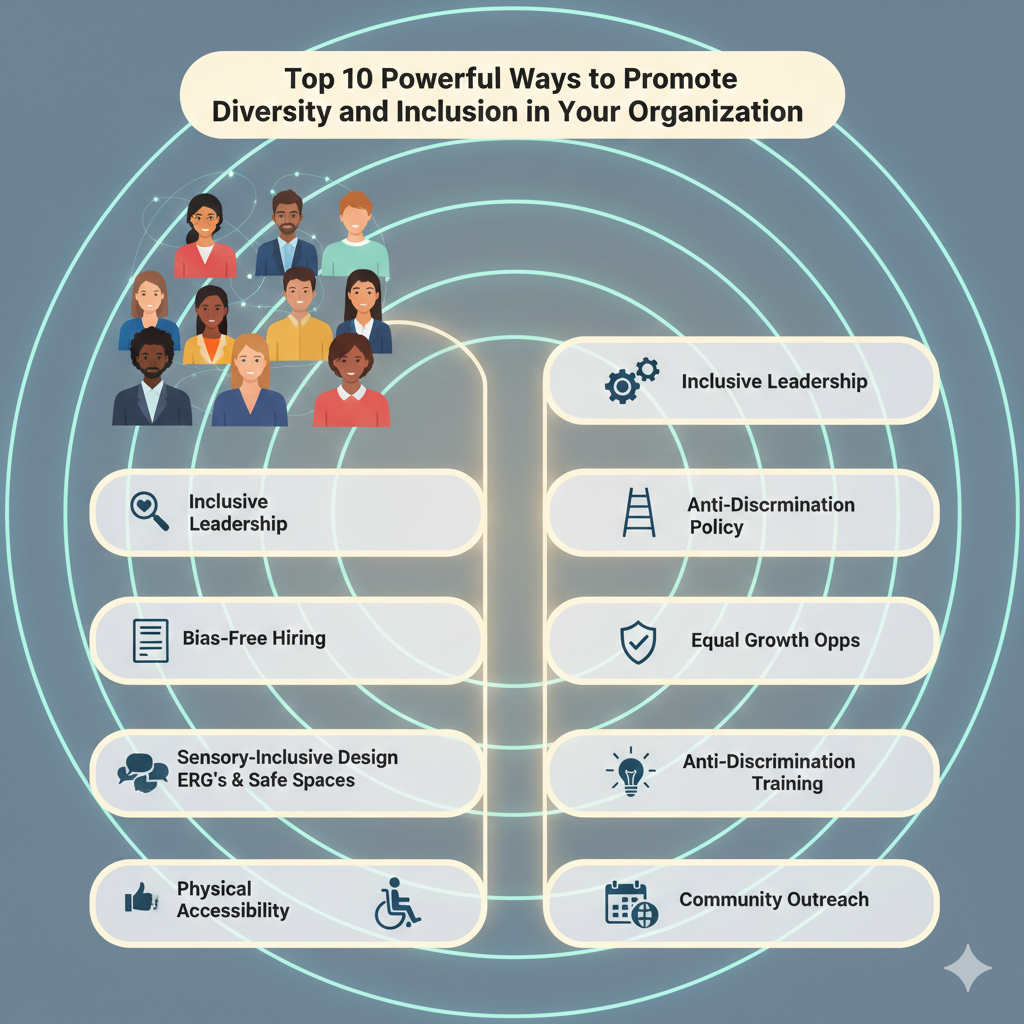
- Introduction
- 1. Build Leadership Commitment to Diversity and Inclusion
- 2. Create Inclusive Hiring Practices
- 3. Provide Diversity and Inclusion Training
- 4. Foster an Inclusive Workplace Culture
- 5. Encourage Open and Respectful Communication
- 6. Support Employee Resource Groups (ERGs)
- 7. Offer Equal Growth and Development Opportunities
- 8. Review Policies for Fairness and Equity
- 9. Measure and Track Diversity Progress
- Track metrics such as:
- 10. Celebrate Diversity and Recognize Inclusion Efforts
Introduction
Diversity and inclusion are no longer optional—they are essential for modern organizations that want to grow, innovate, and stay competitive. A diverse workforce brings different perspectives, ideas, and experiences, while inclusion ensures everyone feels valued, respected, and heard.
Organizations that actively promote inclusivity often see better employee engagement, stronger teamwork, and improved business performance. In this article, we’ll explore the top 10 practical workplace strategies to strengthen diversity and inclusion in your organization.
1. Build Leadership Commitment to Diversity and Inclusion
Real change starts at the top. Leaders must openly support and prioritize diversity and inclusion through actions, not just words.
How to apply:
- Set clear D&I goals
- Hold leadership accountable
- Communicate commitment regularly
When leaders lead by example, inclusion becomes part of the company culture.
2. Create Inclusive Hiring Practices
Inclusive hiring ensures equal opportunities for candidates from all backgrounds.
Best practices include:
- Writing unbiased job descriptions
- Using diverse hiring panels
- Focusing on skills, not stereotypes
These steps help reduce unconscious bias and build a more diverse workforce.
3. Provide Diversity and Inclusion Training
Training helps employees understand bias, respect differences, and work more effectively together.
Effective training topics:
- Unconscious bias
- Cultural awareness
- Inclusive communication
Regular sessions help reinforce inclusive behaviors across the organization.
4. Foster an Inclusive Workplace Culture
An inclusive culture makes employees feel safe, respected, and valued.
Ways to promote inclusivity:
- Encourage open dialogue
- Celebrate cultural differences
- Support diverse employee voices
When people feel included, they perform better and stay longer.
5. Encourage Open and Respectful Communication
Communication plays a key role in diversity and inclusion.
Tips:
- Create safe spaces for feedback
- Listen actively to employee concerns
- Address discrimination quickly
Open communication builds trust and strengthens workplace relationships.
6. Support Employee Resource Groups (ERGs)
Employee Resource Groups bring people together based on shared identities or interests.
Benefits of ERGs:
- Stronger sense of belonging
- Leadership development
- Improved employee engagement
ERGs also provide valuable insights to management.
7. Offer Equal Growth and Development Opportunities
Inclusion means fair access to learning, promotions, and leadership roles.
Workplace strategies include:
- Transparent promotion criteria
- Mentorship programs
- Skill development opportunities
This ensures everyone has a chance to succeed.
8. Review Policies for Fairness and Equity
Company policies should support diversity and inclusion at every level.
Areas to review:
- Pay equity
- Flexible work arrangements
- Anti-discrimination policies
Fair policies create a supportive and inclusive work environment.
9. Measure and Track Diversity Progress
What gets measured gets improved.
Track metrics such as:
- Workforce diversity data
- Employee satisfaction surveys
- Inclusion feedback
Regular reviews help identify gaps and improve strategies.
10. Celebrate Diversity and Recognize Inclusion Efforts
Recognizing diversity-related achievements reinforces positive behavior.
Ideas include:
- Inclusion awards
- Company-wide recognition
Celebration encourages participation and long-term commitment.