

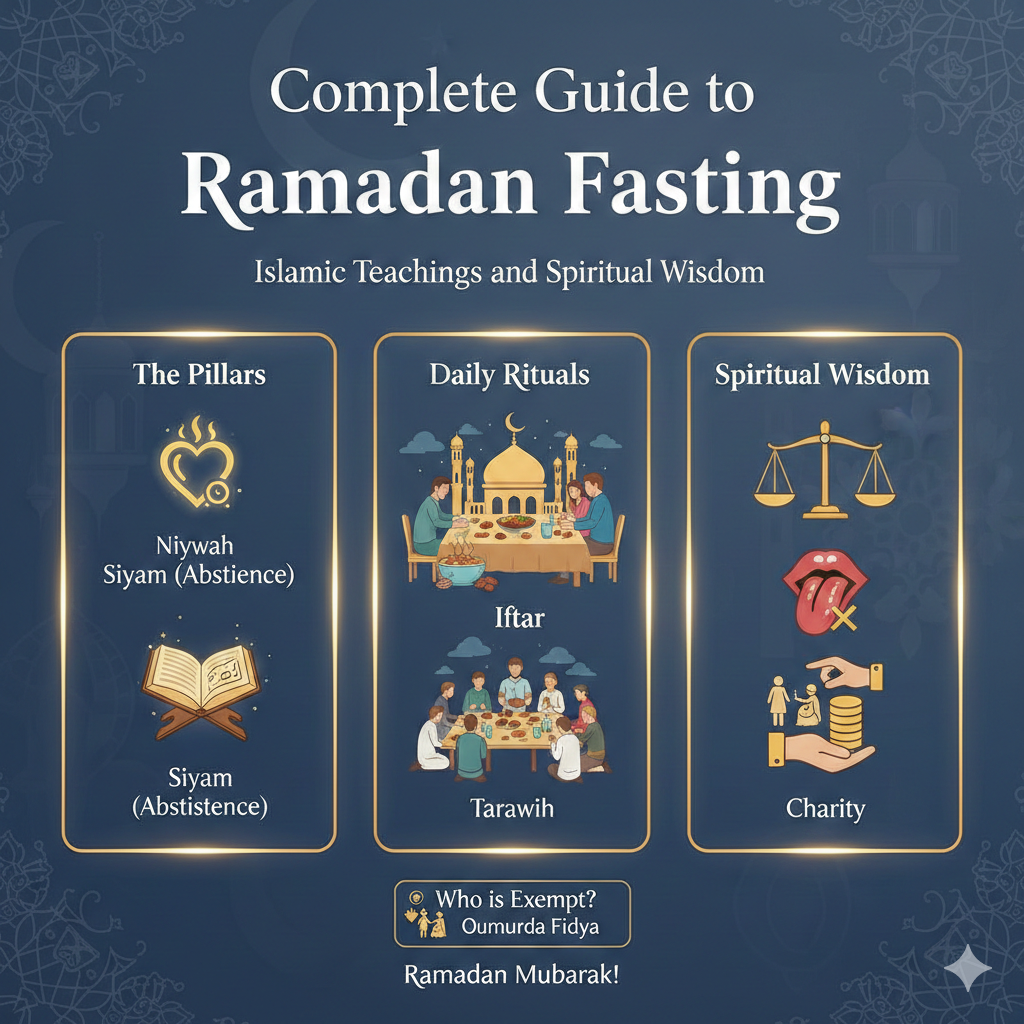
Fasting in Islam is more than just staying hungry or thirsty. It is a powerful act of worship that strengthens faith, builds self-discipline, and brings a believer closer to Allah. From spiritual purification to social responsibility, fasting holds deep significance in Islamic teachings.
What Is Fasting (Sawm) in Islam?
In Islam, fasting is known as Sawm, which means to abstain. During fasting, Muslims refrain from eating, drinking, smoking, and marital relations from dawn (Fajr) until sunset (Maghrib). Fasting is one of the Five Pillars of Islam, making it a fundamental act of worship.
The obligation of fasting is mentioned in the Holy Quran:
“O you who believe, fasting is prescribed for you as it was prescribed for those before you, that you may become righteous.”
— Qur’an (2:183)
This verse highlights the main purpose of fasting: Taqwa (God-consciousness).
Fasting During Ramadan
Fasting is obligatory during the holy month of Ramadan, the ninth month of the Islamic lunar calendar. It is the month in which the Quran was revealed to Prophet Muhammad (peace be upon him).
Ramadan is not just about hunger; it is about:
- Strengthening connection with Allah
- Increasing prayer and recitation of the Quran
- Giving charity (Zakat and Sadaqah)
- Practicing patience and gratitude
The Prophet Muhammad (peace be upon him) said:
“Whoever fasts Ramadan out of faith and seeking reward, his previous sins will be forgiven.”
— Sahih al-Bukhari
The Spiritual Benefits of Fasting
1. Developing Taqwa (God-Consciousness)
Fasting trains the soul to be mindful of Allah at all times. Even when no one is watching, a believer refrains from eating or drinking because Allah is watching.
2. Self-Discipline and Control
By controlling basic desires, Muslims learn patience and self-restraint. This discipline extends to controlling anger, gossip, and bad behavior.
3. Purification of the Heart
Fasting softens the heart and reduces attachment to worldly pleasures. It increases sincerity and humility before Allah.
4. Increased Reward
Fasting has a unique reward. In a Hadith Qudsi, Allah says:
“Fasting is for Me, and I will reward it.”
— Sahih Muslim
This shows the special status of fasting among acts of worship.
Social and Moral Impact of Fasting
Fasting also builds empathy for the poor and hungry. When Muslims experience hunger themselves, they better understand the struggles of those in need. This encourages generosity and charity.
Ramadan strengthens community bonds as families gather for Suhoor (pre-dawn meal) and Iftar (meal to break the fast). Mosques are filled with worshippers offering Taraweeh prayers together.
Who Is Exempt from Fasting?
Islam is a religion of mercy. Certain individuals are exempt from fasting, including:
- The sick
- Travelers
- Pregnant or breastfeeding women (if fasting harms them)
- Elderly people unable to fast
They may make up missed fasts later or provide compensation (Fidya) according to Islamic rulings.
Voluntary Fasts in Islam
Besides Ramadan, Islam encourages voluntary fasting, such as:
- Fasting on Mondays and Thursdays
- Fasting on the Day of Arafah
- Fasting on Ashura
These voluntary fasts bring additional rewards and spiritual growth.
The Final Paragraph in a piece of writing
Fasting in Islam is a complete spiritual system that purifies the soul, strengthens character, and builds a compassionate society. It is not merely about avoiding food and drink but about transforming the heart and developing a deeper relationship with Allah.
Through fasting, Muslims learn patience, gratitude, self-control, and devotion — qualities that shape a righteous and successful life both in this world and the Hereafter.