

- Legal and Policy Foundations of DEI Initiatives
- DEI Initiatives in a Changing Political Landscape
- Why DEI Initiatives Drive Organizational Benefits
- Common DEI Initiatives Organizations Use
- DEI Initiative Examples for 2025
- DEIA in Action: Federal, Corporate & Education Sectors
- Measuring and Improving DEIA Outcomes
- Key Takeaways
- FAQs
Diversity, Equity, Inclusion, and Accessibility (DEIA) initiatives have become critical to organizational success in 2025. Across the United States, Canada, and globally, organizations are embracing DEIA not only as a moral responsibility but also as a strategic business advantage.
Rooted in equal employment laws such as the Civil Rights Act of 1964, Title VII, and the Equal Employment Opportunity (EEO) framework, DEIA programs are designed to eliminate workplace discrimination, promote fairness, and ensure equal opportunities for all employees. These initiatives support marginalized communities, including Black Americans, transgender individuals, persons with disabilities, and other underrepresented groups.
From corporate America to federal contractors, higher education, the military, and international organizations, DEI initiatives are reshaping workplace culture and performance.
Legal and Policy Foundations of DEI Initiatives
DEIA programs are guided by federal and international legal frameworks that ensure civil rights protections and equitable employment practices. Key regulations and policies include:
- Executive Order 11246 – Prohibits discrimination by federal contractors
- Executive Order 13985 – Advances racial equity and inclusion for underserved communities
- Office of Management and Budget (OMB) Guidance
- Pay Equity Audits and Skills-Based Hiring Programs
Federal employees and grantees must comply with these standards to maintain transparency, accountability, and legal compliance.
DEI Initiatives in a Changing Political Landscape
Recent political developments have made DEI initiatives a contested topic. Debates involving figures such as Donald Trump, Greg Abbott, the Florida Board of Governors, and legislation like the Stop WOKE Act have placed DEI programs under scrutiny.
Despite political challenges, research consistently shows that diversity initiatives improve workplace culture, increase employee satisfaction, and boost organizational performance. Many organizations continue to invest in DEIA as a long-term growth strategy.
Why DEI Initiatives Drive Organizational Benefits
Organizations that prioritize diversity, equity, inclusion, and accessibility experience measurable benefits across key business areas.
1. Innovation and Productivity
Diverse teams enhance creativity, problem-solving, and decision-making. DEI workshops and leadership development programs such as Project Lifechanger help employees build inclusive leadership skills.
2. Financial Performance
According to McKinsey & Company, organizations with high racial and ethnic diversity are 35% more likely to outperform their peers financially. Inclusive companies attract top talent and respond positively to investor expectations around ethics and social responsibility.
3. Workplace Culture Transformation
DEIA initiatives foster belonging and psychological safety through:
- Mentorship software and sponsorship programs
- Neurodiversity hiring initiatives
- Accessibility-focused workplace design
Skills-based recruitment practices
4. Legal and Ethical Compliance
DEI frameworks ensure compliance with:
- Federal anti-discrimination laws
- The Age Discrimination in Employment Act
- “Don’t Ask, Don’t Tell” repeal protections
- Supreme Court and Attorney General guidance
5. Long-Term Business Sustainability
Equity Action Plans and DEI benchmarks in Canada and other regions signal ethical leadership and help organizations maintain a competitive edge.
Common DEI Initiatives Organizations Use
Organizations adopt a wide range of strategies to embed DEIA principles effectively.
Inclusion and DEI Workshops
Training on unconscious bias, microaggressions, cultural competency, and critical race theory. Tools such as the Implicit Association Test help measure impact.
Employee Resource Groups (ERGs)
Support networks for LGBTQ+, parents, minorities, and other affinity groups that provide mentorship, advocacy, and professional development.
Recruitment and Hiring Practices
- Skills-based hiring
- Affirmative action programs
- Race-conscious policies
- Employment equity strategies
Policy and Accessibility Initiatives
Focus on pay equity, academic freedom, environmental justice, disability inclusion, and supply chain diversity.
Employee Engagement and Retention
Platforms like Qooper Mentoring Software support feedback collection, promotion tracking, and retention analysis.
Leadership Accountability
Chief Diversity Officers track progress using diversity reports, measurable goals, and compliance metrics.
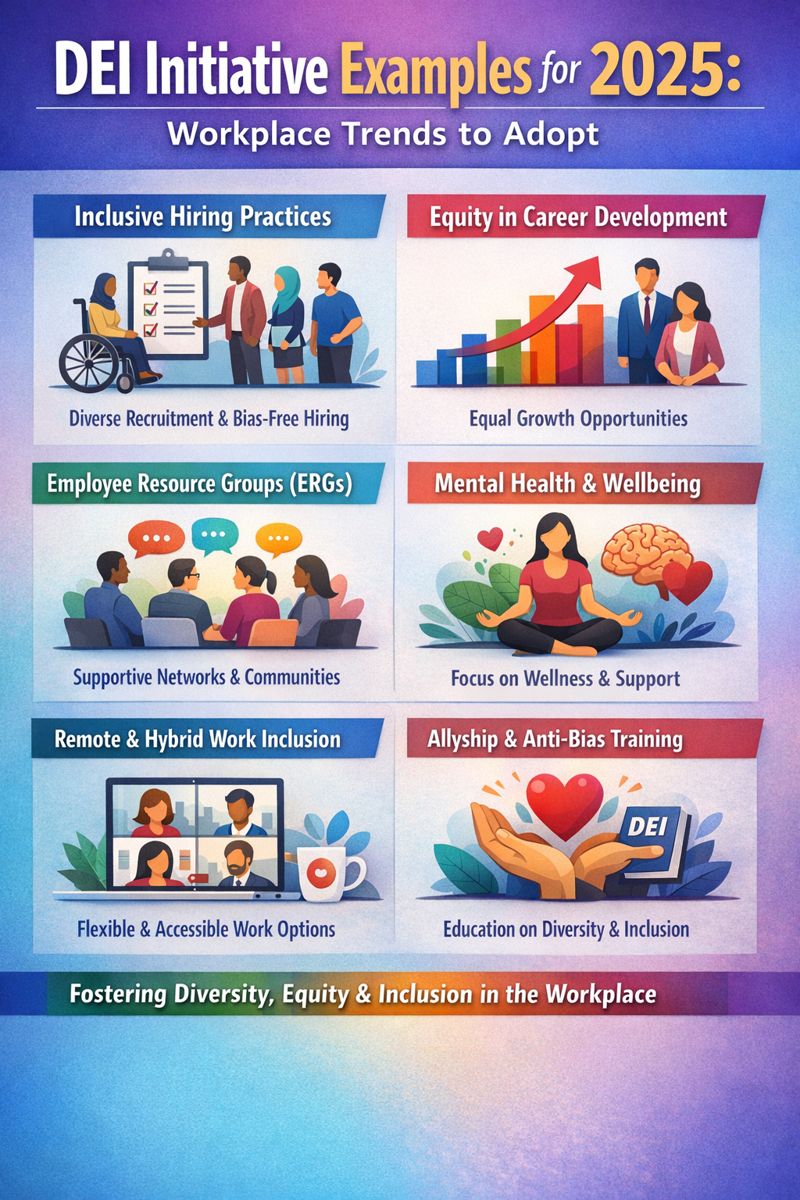
DEI Initiative Examples for 2025
1. Inclusive Hiring Practices
- Blind recruitment
- Diverse interview panels
- Inclusive job descriptions
2. Employee Resource Groups (ERGs)
- Mentorship and networking
- Policy advocacy
- Leadership development
3. Mentorship Programs
- Pair underrepresented employees with senior leaders
- Strengthen leadership pipelines
- Support career advancement
4. Equity Action Plans
- Pay equity audits
- Measurable DEI goals
- Race-conscious hiring strategies
5. Inclusive Benefits and Policies
- Gender-affirming healthcare
- Disability accommodations
- Adoption and caregiver support
6. DEI Training and Workshops
- Bias awareness
- Cultural competency
- Inclusive leadership training
7. Supplier Diversity & Community Engagement
- Partner with minority-owned businesses
- Promote economic inclusion
- Strengthen community ties
DEIA in Action: Federal, Corporate & Education Sectors
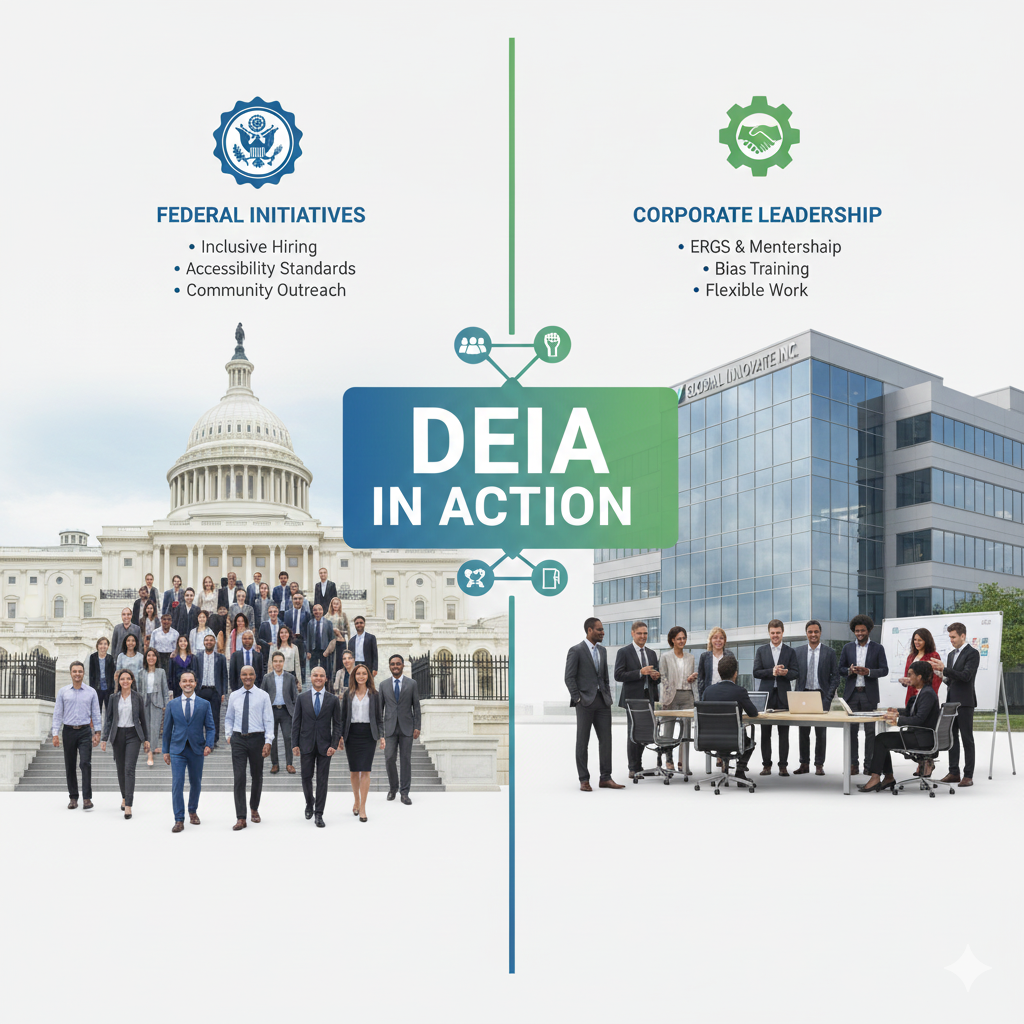
- Federal Workforce: OMB, Pentagon, and federal grantees enforce Equity Action Plans
- Corporate America: Pay equity audits, mentorship software, and diversity reporting
- Higher Education: Race-based admissions policies aligned with civil rights law
- Military: Inclusive leadership, neurodiversity, and accessibility programs
Measuring and Improving DEIA Outcomes
- Data Analysis: Workforce demographics, promotion and retention rates
- Employee Feedback: Anonymous satisfaction surveys
- Targeted Action Plans: Equity Action Plans by priority
- Leadership Accountability: Diversity reports and CDO oversight
Continuous Improvement: Address DEI fatigue and adapt initiatives over time
Key Takeaways
- DEI initiative examples are essential for inclusive, productive, and ethical workplaces
- Inclusive hiring and ERGs reduce bias and improve representation
- Equity Action Plans and pay equity audits ensure measurable progress
- DEI training builds awareness and inclusive behaviors
- Accessibility and inclusive benefits support marginalized employees
- Leadership accountability ensures DEIA goals are actionable and sustainable
FAQs
1. What are DEI initiatives?
Programs designed to promote fairness, equal opportunity, and respect for all employees.
2. Why are DEI initiatives important in 2025?
They improve innovation, employee satisfaction, compliance, and business performance.
3. How do organizations measure DEI success?
Through diversity metrics, surveys, retention data, and leadership reports.