

- What Is Diversity Management?
- Key Challenges in Diversity Management
- Three Paradigms of Diversity Management
- Diversity Management Best Practices for 2026
- How to Measure Diversity and Inclusion Initiatives
- Diversity and Inclusion Case Studies
- Benefits of a Diverse and Inclusive Workforce
- Why Is Diversity Management Important?
- (FAQs)
Even though some of the most influential literature on diversity management dates back to the late 1990s, diversity management remains as important today as ever—perhaps even more so. As workplaces become increasingly global, digital, and values-driven, organizations can no longer afford to treat diversity and inclusion (D&I) as optional initiatives.
Creating a diverse and inclusive workplace is not only ethically sound—it is also a proven business advantage. According to a 2019 study by the Network for Business Sustainability, diverse firms are 1.32 times more productive than firms lacking diversity (Turner & Fischoff, 2019).
Despite strong evidence and common sense, diversity management remains controversial due to misinformation, resistance to change, and so-called “anti-woke” narratives. This makes continued, informed discussion more important than ever.
What Is Diversity Management?
To understand diversity management, we must first define diversity.
According to Lee Gardenswartz and Anita Rowe in Diverse Teams at Work: Capitalizing on the Power of Diversity (1998), diversity consists of four dimensions:
Internal Dimensions – Age, gender, ethnicity, sexual orientation, physical ability
External Dimensions – Education, religion, income, marital status
Organizational Dimensions – Job role, seniority, department, work location
Personality Dimensions – Values, thinking styles, beliefs
Diversity management is the process of creating and sustaining a workplace that values, respects, and leverages differences across all these dimensions. Most workplace D&I conversations focus on internal dimensions, as these are most closely tied to systemic inequality.
Key Challenges in Diversity Management
Despite broad support for equality, organizations still face significant challenges in implementing effective diversity management.
- Resistance to Change
Some employees view diversity initiatives as forced or threatening. While resistance to change is human, unchecked resistance can reinforce exclusion and misinformation. - Lack of Representation
Underrepresentation—especially in leadership—limits diverse voices in decision-making. Without representation, diversity strategies often fail to address real needs. - Unconscious Bias
Unconscious bias leads to decisions based on stereotypes rather than merit. When combined with resistance and lack of representation, bias becomes deeply entrenched. - Lack of Accountability
Without clear accountability, diversity initiatives lose momentum. Leaders must be measured and held responsible for progress—not just statements.
Three Paradigms of Diversity Management
Robin J. Ely and David A. Thomas outlined three key paradigms in Making Differences Matter (1996). These paradigms remain highly relevant today.
- Discrimination and Fairness Paradigm
Focuses on compliance, equal opportunity, and anti-discrimination policies.
Strength: Reduces bias and legal risk
Limitation: Often fails to leverage diversity for innovation - Learning and Effectiveness Paradigm
Views diversity as a driver of innovation, learning, and performance.
Strength: Encourages collaboration and new perspectives
Best for long-term organizational success - Access and Legitimacy Paradigm
Recognizes diversity as a way to connect with diverse markets and communities.
Strength: Improves brand credibility and market reach
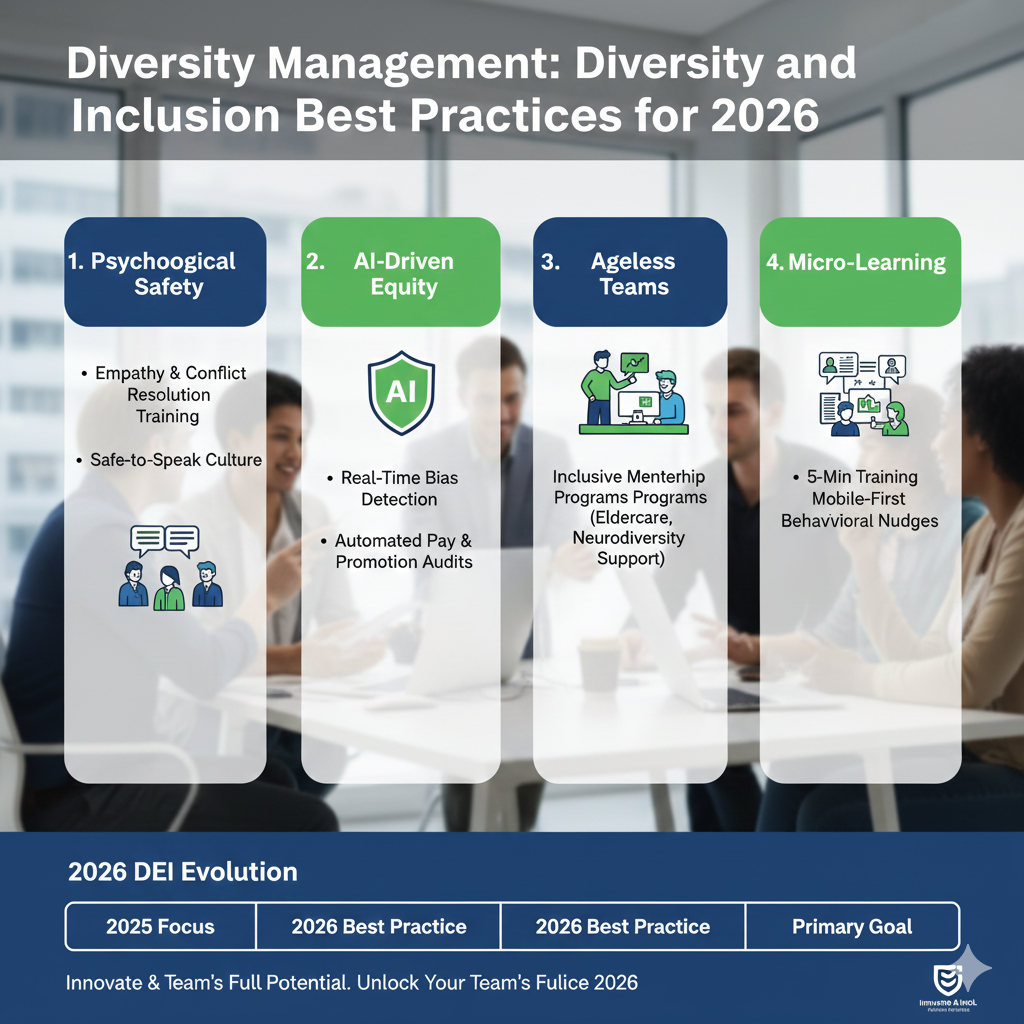
Diversity Management Best Practices for 2026
1. Promote Diversity in Leadership
Leadership diversity ensures inclusive decision-making and role modeling. Mentorship and sponsorship programs are essential.
2. Encourage Storytelling and Employee Voice
Employee resource groups (ERGs), storytelling sessions, and open forums help teams connect and build trust.
3. Provide Continuous D&I Training
Training should go beyond bias awareness and focus on inclusive behaviors, cultural competence, and allyship.
4. Foster a Culture of Inclusion
Inclusion means ensuring no one is left behind as culture evolves. Clear behavioral expectations and swift action against discrimination are critical.
5. Build a Diverse Workforce
Review job descriptions for biased language and expand recruitment channels.
📊 76% of job seekers consider diversity an important factor when choosing an employer.
How to Measure Diversity and Inclusion Initiatives
Measuring D&I success requires listening to employees. Key methods include:
- Employee pulse surveys
- Representation metrics
- Promotion and retention data
- Engagement and belonging scores
Using performance management and survey tools integrated into daily workflows helps track progress consistently.
Diversity and Inclusion Case Studies
1. Salesforce
Salesforce uses inclusive hiring practices, ERGs, equality dashboards, and mentorship programs to maintain accountability and transparency.
2. Marriott International
Marriott has implemented leadership programs for women and underrepresented groups, with a goal of achieving global gender parity in leadership.
3. Procter & Gamble
P&G supports diversity through ERGs, mentorship, inclusive media initiatives, and transparency goals for multicultural representation.
Benefits of a Diverse and Inclusive Workforce
- Increased innovation and creativity
- Higher employee engagement
- Stronger employer brand
- Access to broader talent pools
- Better decision-making
- Improved financial performance
Why Is Diversity Management Important?
Diversity management is essential for building resilient, innovative, and future-ready organizations. It helps attract top talent, reduce bias, improve performance, and create workplaces where everyone can thrive.
(FAQs)
Q1: What is diversity management in simple terms?
Diversity management is the practice of creating a workplace that respects, includes, and benefits from differences among employees.
Q2: Why is diversity management important for businesses?
It improves innovation, decision-making, employee engagement, and overall performance.
Q3: What are common diversity management challenges?
Resistance to change, unconscious bias, lack of representation, and weak accountability.
Q4: How can companies measure D&I success?
Through employee surveys, representation data, retention rates, and engagement metrics.
Q5: What industries benefit most from diversity management?
All industries benefit, but technology, healthcare, education, finance, and hospitality see particularly strong gains.