

- 1. Battery Technology Improvements
- 2. Powertrain and Efficiency Enhancements of Electric Car Technology
- 3. Charging Infrastructure Expansion electric car technology7
- 4. Vehicle-to-Everything (V2X) Capabilities Electric Car Technology in 2026 Driving the Future
- 5. Autonomous and Connected Technologies
- 6. Materials and Manufacturing Innovation
- 7. Market Trends and Adoption Factors
Electric car Technology has transitioned from emerging alternatives to mainstream mobility solutions. By 2026, advancements in electric car technology are reshaping transportation, energy infrastructure, and consumer expectations. This article examines the key developments driving the future of electric cars.
1. Battery Technology Improvements
Battery systems remain central to EV performance and cost. In 2026, improvements focus on energy density, charging speeds, and life span.
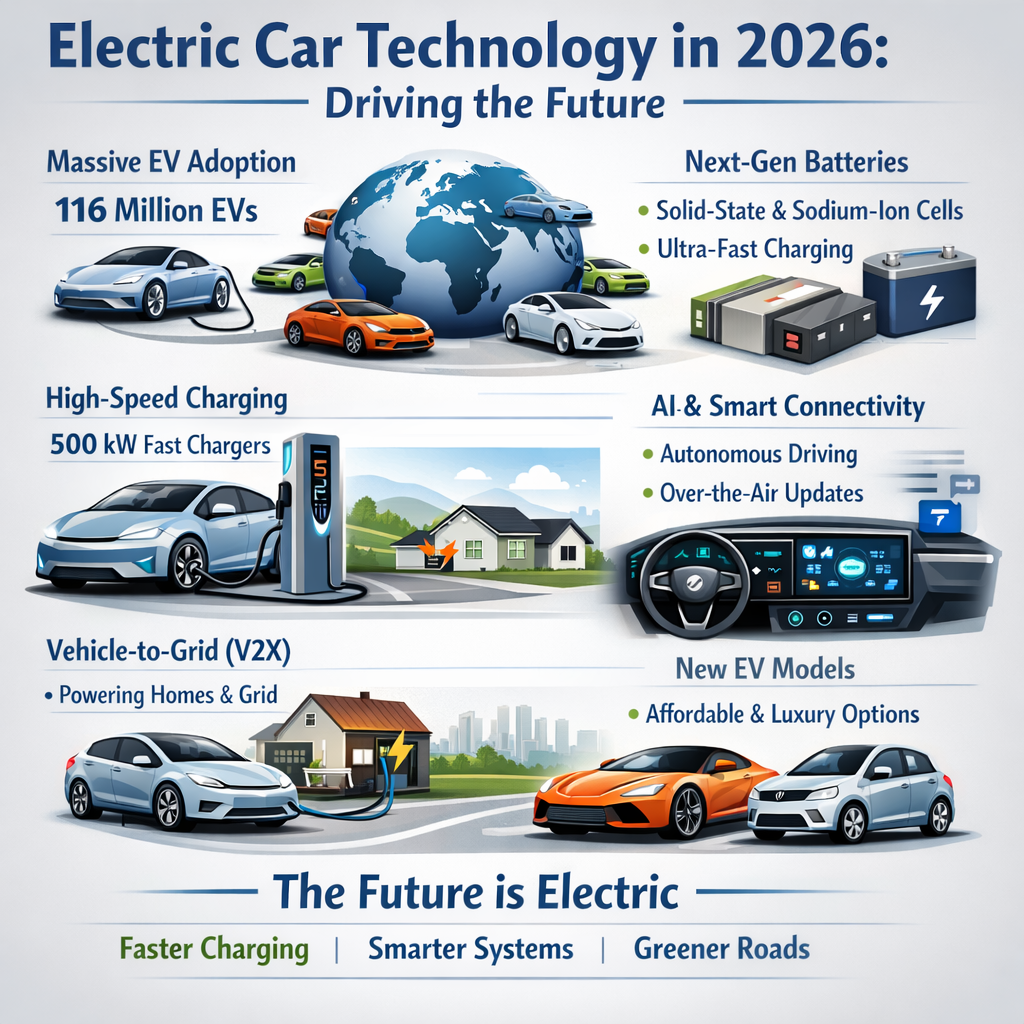
- Higher Energy Density: Next-generation lithium-ion and solid-state batteries deliver greater range per charge, enabling many models to exceed 500-mile estimated ranges.
- Faster Charging: New chemistries and thermal management systems support ultra-fast charging. Charging times for 10–80% states of charge are routinely under 20 minutes at high-power stations.
- Longevity and Safety: Solid-state designs and enhanced electrolytes reduce degradation and thermal risk, extending usable life cycles and lowering total cost of ownership.
2. Powertrain and Efficiency Enhancements of Electric Car Technology
Electric car technology powertrains have become more efficient and compact.
- Integrated Motor Units: Motor, inverter, and gearbox modules combine into highly efficient packages, reducing weight and improving packaging flexibility.
- Advanced Control Systems: Software-defined power management optimizes energy use in real time, adapting motor torque and regenerative braking to conditions.
3. Charging Infrastructure Expansion electric car technology7
The growth of charging networks supports broader EV adoption.
- High-Power Charging Stations: Public and private networks deploy chargers exceeding 350 kW capacity, reducing wait times and improving long-distance travel feasibility.
- Smart Charging: Grid-integrated chargers coordinate with energy supply, shifting loads to off-peak periods and enabling vehicle-to-grid (V2G) functionality.
- Residential Innovation: Home chargers with dynamic load balancing manage household electrical demand and enhance safety.
4. Vehicle-to-Everything (V2X) Capabilities Electric Car Technology in 2026 Driving the Future
EVs play active roles in energy ecosystems.
- Vehicle-to-Grid (V2G): Bi-directional charging allows parked EVs to supply stored energy back to the grid during peak demand, providing stability services and potential financial incentives to owners.
- Vehicle-to-Home (V2H): In outages or peak pricing periods, EVs function as emergency power sources for homes.
- Vehicle-to-Load (V2L): Devices can draw power directly from the vehicle for tools, appliances, or recreational use.
5. Autonomous and Connected Technologies
Electric car technology is increasingly integratingis advanced driver support and connectivity.
- Advanced Driver-Assistance Systems (ADAS): Features like adaptive cruise control, lane-centering, and automated parking improve safety and convenience.
- Data and Connectivity: Over-the-air (OTA) updates refine performance and add features throughout a vehicle’s life cycle. Connected systems facilitate route planning with charging optimization.
6. Materials and Manufacturing Innovation
Sustainable materials and efficient manufacturing processes reduce environmental impact.
- Lightweight Structures: High-strength aluminum and composites decrease vehicle mass, improving range and efficiency.
- Recycled Content: Increased use of recycled metals and plastics minimizes resource consumption.
- Modular Platforms: Shared electric platforms across model lines reduce development time and manufacturing costs.
7. Market Trends and Adoption Factors
By 2026, electric car technology represent a substantial share of global vehicle sales.
- Cost Competitiveness: Lower battery costs and scale economies bring EV purchase prices closer to internal combustion engine (ICE) equivalents.
- Policy and Regulation: Emissions standards and incentives in many regions favor EV adoption and infrastructure deployment.
- Consumer Perception: Greater familiarity with EV capabilities and ownership experience increases market acceptance.