

- Introduction
- Understanding Diversity in Education
- Why Inclusive Learning Matters in Schools
- Creating an Inclusive School Culture
- Inclusive Teaching Practices
- Supporting Students With Different Learning Needs
- Encouraging Cultural Awareness and Respect
- Family and Community Involvement
- Training Educators for Inclusive Learning
- Using Policies to Support Inclusion
- Measuring Success in Inclusive Education
- Frequently Asked Questions (FAQs)
Introduction
Diversity in education plays a vital role in shaping fair, respectful, and effective learning environments. Schools today serve students from different cultural, social, economic, and learning backgrounds. When diversity is embraced, students feel valued, respected, and motivated to learn.
Inclusive learning is not just about accepting differences—it is about creating opportunities where every student can succeed. Schools that prioritize diversity and inclusion help students develop empathy, critical thinking, and collaboration skills that prepare them for a global society.
Understanding Diversity in Education
Diversity in education refers to the presence of students with different:
- Cultural and ethnic backgrounds
- Languages and traditions
- Learning abilities and disabilities
- Socioeconomic experiences
- Beliefs and perspectives
Recognizing these differences allows schools to design learning experiences that meet the needs of all students.
Why Inclusive Learning Matters in Schools
Inclusive learning environments promote equal access to education and help students feel a sense of belonging.
Key benefits include:
- Improved academic performance
- Stronger social skills
- Reduced discrimination and bias
- Increased student confidence
When students feel included, they are more likely to participate actively and succeed academically.
Creating an Inclusive School Culture
A positive school culture sets the foundation for inclusion.
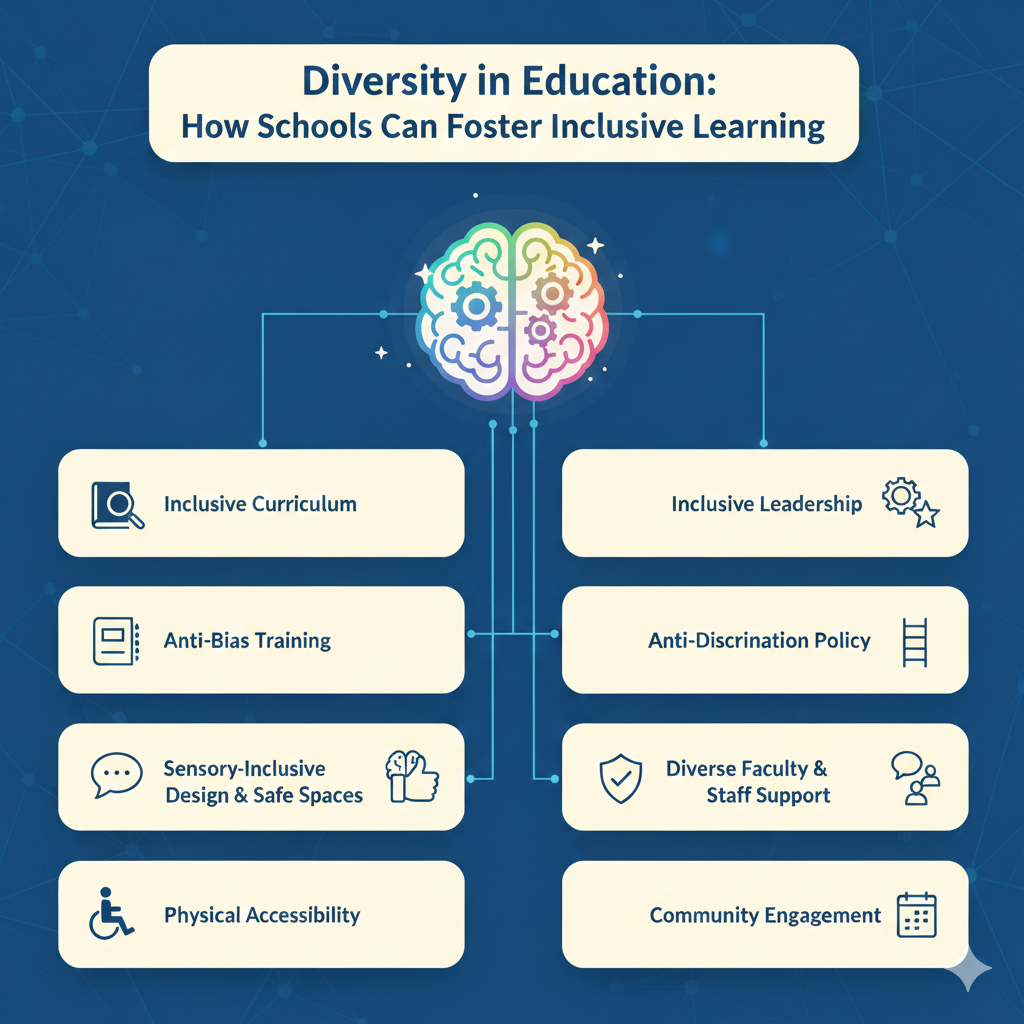
Schools can foster inclusivity by:
- Promoting respect and kindness
- Encouraging open conversations about differences
- Addressing bullying and discrimination promptly
A welcoming culture ensures that every student feels safe and supported.
Inclusive Teaching Practices
Teachers play a critical role in inclusive learning.
Effective strategies include:
- Using diverse teaching materials
- Adapting lessons for different learning styles
- Encouraging collaboration and group work
Inclusive teaching ensures that all students can engage and learn effectively.
Supporting Students With Different Learning Needs
Inclusive education supports students with disabilities and learning challenges.
Schools can help by:
- Providing special education services
- Offering assistive technologies
- Creating individualized learning plans
These supports allow students to reach their full potential.
Encouraging Cultural Awareness and Respect
Teaching cultural awareness helps students appreciate differences.
Schools can:
- Celebrate cultural events and traditions
- Include multicultural content in lessons
- Encourage students to share their experiences
This builds empathy and mutual respect among students.
Family and Community Involvement
Parents and communities play an important role in fostering diversity in education.
Ways to involve families include:
- Open communication with parents
- Inclusive school events
- Community partnerships
Collaboration strengthens inclusive learning efforts.
Training Educators for Inclusive Learning
Professional development helps teachers understand diversity better.
Training topics may include:
- Inclusive classroom management
- Cultural sensitivity
- Supporting diverse learners
Well-trained educators create more effective learning environments.
Using Policies to Support Inclusion
Clear school policies help ensure fairness and equity.
Inclusive policies should address:
- Equal opportunities for all students
- Anti-discrimination rules
- Accessibility and accommodations
Strong policies support long-term inclusion.
Measuring Success in Inclusive Education
Schools should regularly assess their inclusion efforts.
Methods include:
- Student feedback surveys
- Academic performance data
- Parent and teacher input
Ongoing evaluation helps schools improve their practices.
Frequently Asked Questions (FAQs)
1. What does diversity in education mean?
Diversity in education refers to recognizing and valuing differences among students, including culture, abilities, language, and background.
2. Why is inclusive learning important in schools?
Inclusive learning helps all students feel valued, improves academic outcomes, and promotes respect and equality.
3. How can teachers support inclusive learning?
Teachers can use diverse teaching methods, adapt lessons, and create supportive classroom environments.
4. What role do parents play in inclusive education?
Parents support inclusion by communicating with schools, participating in events, and encouraging respect at home.
5. How do inclusive classrooms benefit students?
Inclusive classrooms improve confidence, social skills, and academic success for all students.
6. Can inclusive education support students with disabilities?
Yes. Inclusive education provides accommodations and support to help students with disabilities learn alongside their peers.