

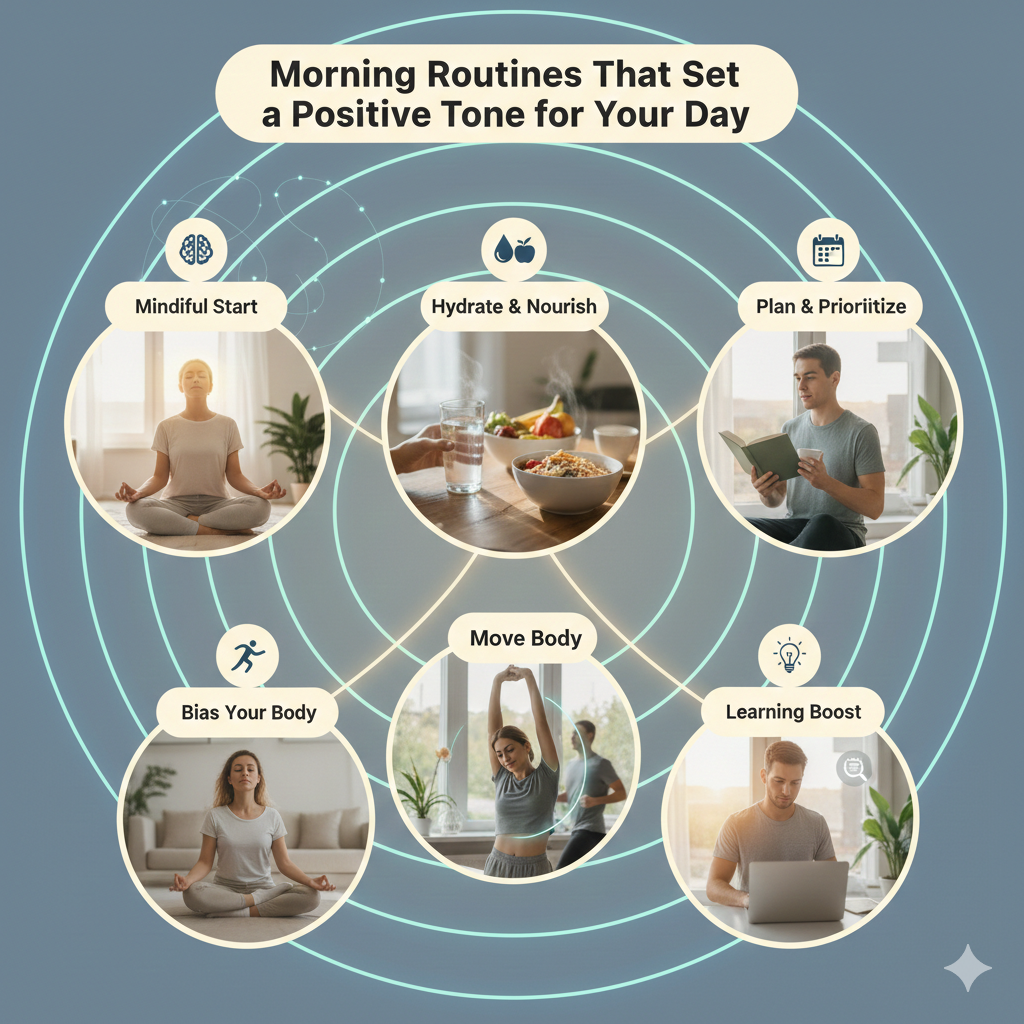
- Introduction
- Why Morning Routines Matter
- 1. Wake Up at a Consistent Time
- 2. Start the Day Without Screens
- 3. Practice Gratitude
- 4. Move Your Body Gently
- 5. Eat a Nourishing Breakfast
- 6. Set Clear Daily Intentions
- 7. Practice Mindfulness or Meditation
- 8. Read or Listen to Something Inspiring
- 9. Plan Your Day Ahead
- 10. Keep Your Routine Simple and Flexible
- Frequently Asked Questions (FAQs)
Introduction
How you start your morning often determines how the rest of your day unfolds. A thoughtful morning routine can help you feel calm, focused, and motivated—even before the day’s challenges begin. Instead of rushing through the morning, building simple habits can set a positive tone that lasts all day.
A strong morning routine supports a positive mindset, improves productivity, and encourages daily positivity. The good news is that you don’t need complicated habits. Small, consistent actions can make a big difference.
Why Morning Routines Matter
Morning routines provide structure and stability. They help your mind and body transition smoothly from rest to activity.
Benefits of a healthy morning routine include:
- Reduced stress and anxiety
- Improved focus and mental clarity
- Better time management
- Increased motivation and energy
When mornings are intentional, your entire day becomes more balanced and productive.
1. Wake Up at a Consistent Time
Waking up at the same time every day trains your body clock. Consistency improves sleep quality and makes mornings feel less rushed.
Tip: Avoid hitting the snooze button. Getting up right away helps you feel more alert and in control.
2. Start the Day Without Screens
Checking your phone immediately can increase stress and distraction. Social media, emails, and news can wait.
Instead, try:
- Deep breathing
- Stretching
- Quiet reflection
This creates mental space and supports a positive mindset.
3. Practice Gratitude
Gratitude shifts your focus from problems to blessings. Even small moments of appreciation can boost daily positivity.
Simple gratitude ideas:
- Write down three things you’re thankful for
- Mentally list positive moments from yesterday
- Express appreciation to someone
Gratitude helps your brain look for good things throughout the day.
4. Move Your Body Gently
Physical movement increases blood flow and energy levels. You don’t need an intense workout.
Easy options include:
- Light stretching
- Yoga
- A short walk
Movement in your morning routine improves mood and productivity.
5. Eat a Nourishing Breakfast
A healthy breakfast fuels both body and brain. Skipping meals can lead to low energy and poor focus.
Healthy breakfast choices:
- Fruits and whole grains
- Protein-rich foods
- Plenty of water
Good nutrition supports stable energy and mental clarity.
6. Set Clear Daily Intentions
Instead of overwhelming to-do lists, choose one to three important goals.
Ask yourself:
- What do I want to focus on today?
- What matters most right now?
Clear intentions guide your actions and reduce stress.
7. Practice Mindfulness or Meditation
Even five minutes of mindfulness can calm your mind and sharpen focus.
Benefits include:
- Reduced anxiety
- Improved emotional balance
- Better decision-making
This habit strengthens your positive mindset throughout the day.
8. Read or Listen to Something Inspiring
Positive input shapes positive output. Start your day with content that motivates you.
Examples:
- Inspirational quotes
- Personal development books
- Educational podcasts
This habit encourages learning and daily positivity.
9. Plan Your Day Ahead
Planning prevents last-minute stress and confusion.
Try this:
- Review your schedule
- Prioritize important tasks
- Allow breaks
A planned day improves productivity and confidence
10. Keep Your Routine Simple and Flexible
The best morning routine is one you can maintain. Avoid perfection and stay flexible.
Some days will be busy—and that’s okay. Even one positive habit can set the tone for your day.
Frequently Asked Questions (FAQs)
1. How long should a morning routine be?
A morning routine can be as short as 10–30 minutes. The key is consistency, not length.
2. Can a morning routine really improve productivit?
Yes. A structured morning routine improves focus, time management, and motivation, leading to better productivity.
3. What if I’m not a morning person?
Start small. One or two simple habits can gradually make mornings easier and more positive.
4. Do I need to wake up very early for a good routine?
No. A good routine depends on quality, not how early you wake up.
5. How soon will I see results from a morning routine?
Many people feel benefits within a few days, while long-term benefits grow with consistency.
6. Can I change my morning routine over time?
Absolutely. Your routine should evolve with your lifestyle and personal goals.