

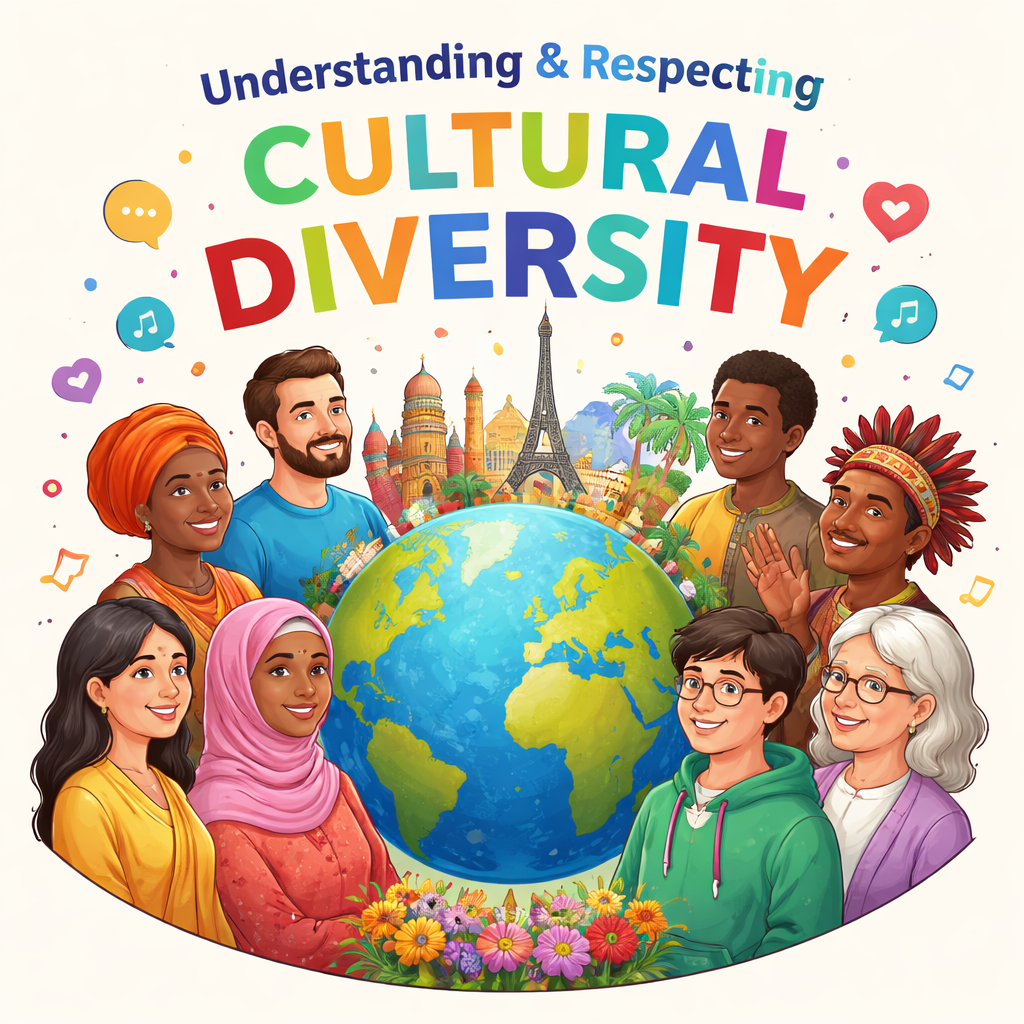
Introduction to Cultural Diversity
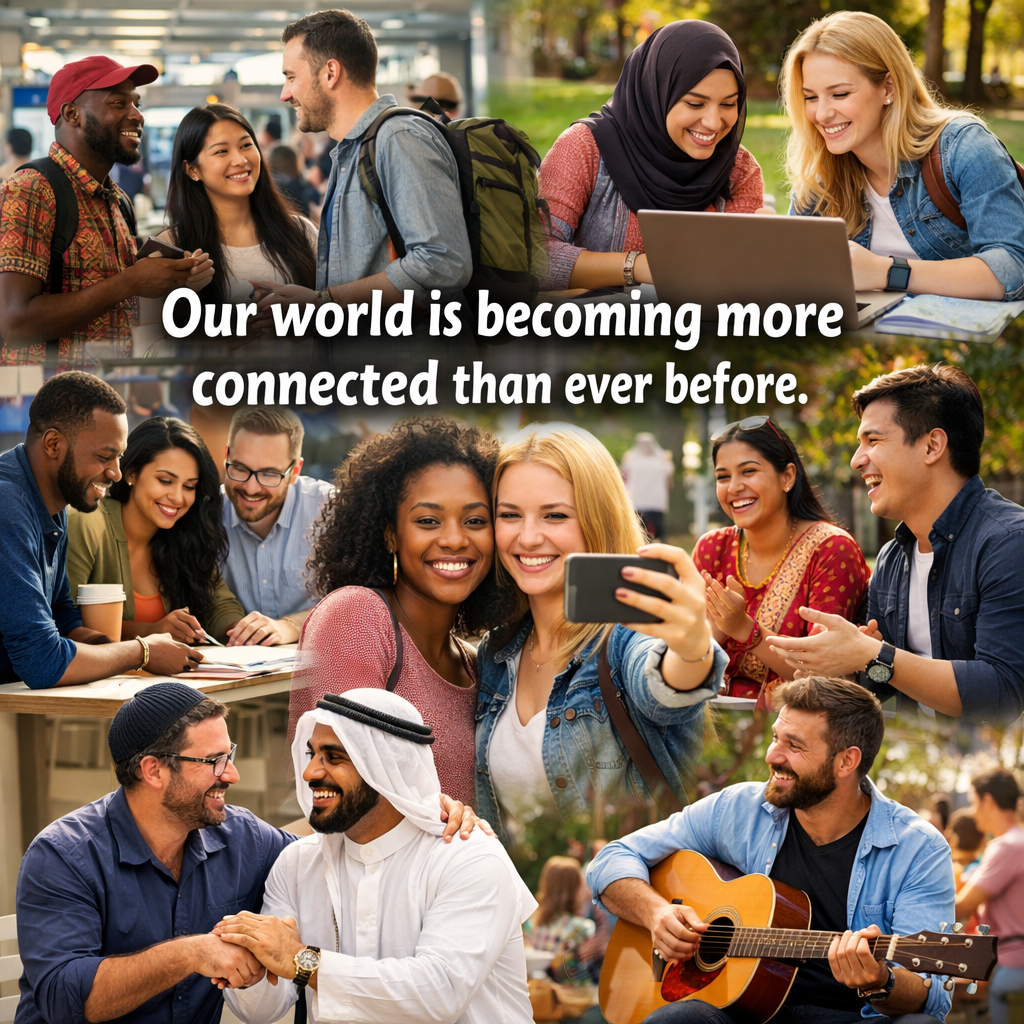
Look around you today — at airports, universities, workplaces, or even social media feeds. You’ll notice something beautiful: people from different cultures interacting every day. Our world is becoming more connected than ever before.
Travel, migration, and digital communication have transformed societies into vibrant cultural mosaics. But with this diversity comes responsibility. Understanding and respecting cultural diversity isn’t just polite behavior — it’s essential for peaceful and progressive communities.
Why Diversity Is More Visible Today
Technology allows people from opposite sides of the globe to connect instantly. A student in Pakistan attends lectures from a professor in the UK. Businesses hire employees worldwide. Food, fashion, music, and traditions cross borders daily.
The world is no longer divided by distance.
Globalization and Cultural Exchange
Globalization works like a giant cultural bridge. Ideas, traditions, and customs travel across continents, blending and influencing societies everywhere.
Instead of isolated cultures, we now share experiences and perspectives.
What Is Cultural Diversity?
Simply put, cultural diversity means different cultural groups living together within the same society.
Definition and Meaning
These differences include language, religion, customs, traditions, clothing styles, food habits, and values. Each culture brings its own worldview and way of life.
Think of society like a garden. A garden with only one type of flower looks plain, but one filled with many varieties is vibrant and alive.
Types of Cultural Differences
Language and Communication
Language shapes how people express emotions, ideas, and respect. Even gestures differ across cultures.
Traditions, Religion, and Social Norms
Festivals, greetings, food practices, and family values vary worldwide. These differences add richness to communities.
Why Cultural Diversity Matters
Cultural diversity is not just interesting — it is powerful.
Promotes Innovation and Creativity
When people from different backgrounds collaborate, they bring fresh ideas and solutions. Diverse teams often outperform uniform groups because multiple viewpoints spark creativity.
Innovation thrives when minds think differently.
Encourages Empathy and Understanding
Meeting people from different cultures challenges stereotypes. You begin to see the world through someone else’s eyes.
Empathy grows when we listen and learn.
Strengthens Communities
Cultural festivals, shared traditions, and multicultural events build stronger bonds among residents. Diversity creates social energy and resilience.
Prepares People for a Globalized Economy
Modern workplaces are multicultural. Understanding cultural differences improves teamwork and communication in international business environments.
Benefits of Cultural Diversity in Daily Life
Cultural Diversity in Education
Students exposed to diverse classmates gain broader perspectives. They learn cooperation and respect early in life.
Cultural Diversity in Workplaces
Workplaces benefit from varied skills, perspectives, and problem-solving approaches. Diversity also improves company reputation and market reach.
Cultural Diversity in Social Communities
Neighborhoods become lively through shared cuisines, festivals, and traditions from different cultures.
Challenges of Cultural Diversity
Despite its advantages, diversity can present challenges.
Language Barriers
Communication gaps sometimes create confusion or misunderstanding.
Stereotypes and Bias
Prejudices can lead to discrimination if people rely on assumptions rather than real understanding.
Cultural Misunderstandings
Different social norms can unintentionally offend others. For example, eye contact or personal space expectations vary globally.
But challenges are opportunities to learn — not reasons to divide.
How to Respect Cultural Diversity
Respect begins with intention.
Educate Yourself About Other Cultures
Read books, attend cultural events, and have meaningful conversations with people from different backgrounds.
Practice Open-Mindedness
Different doesn’t mean wrong. Keep curiosity stronger than judgment.
Create Inclusive Environments
Schools and workplaces should celebrate cultural events and support equality policies.
Communicate Respectfully
Listen actively and ask respectful questions. Communication builds bridges.
Stand Against Discrimination
Silence supports prejudice. Speaking up promotes fairness and safety for all.
Role of Technology in Cultural Diversity
Technology plays a huge role in shaping cultural understanding today.
Social Media and Cultural Exchange
Platforms like YouTube, Instagram, and TikTok allow people to share traditions, food, fashion, and experiences globally.
Digital Global Communities
Online gaming, forums, and digital workplaces connect people across continents, forming multicultural friendships.
The Future of Cultural Diversity
Increasing Global Connections
As travel and technology expand, interactions among cultures will grow stronger.
Building Inclusive Societies
The future belongs to communities that celebrate diversity rather than fear it. Inclusion will become a key strength for nations.
Cultural diversity is one of humanity’s greatest treasures. It expands perspectives, inspires innovation, and strengthens communities.
When we learn from each other instead of judging differences, society becomes richer and more harmonious. Respect, empathy, and open-mindedness turn diversity into unity.
In a world full of differences, embracing cultural diversity is not optional — it’s the pathway to a peaceful and thriving future.