

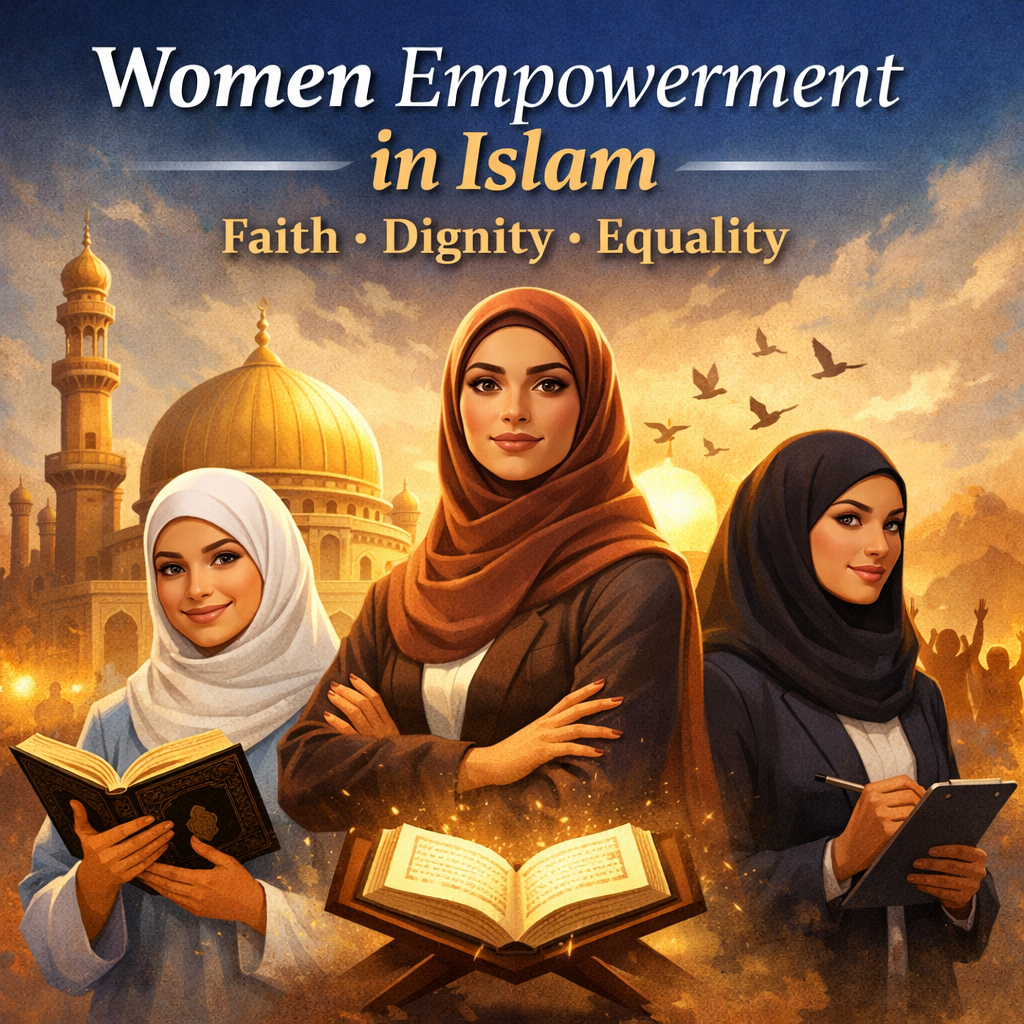
- Understanding Women Empowerment in Islam
- The Status of Women Before and After Islam
- Education: A Fundamental Right for Women in Islam
- Economic Empowerment of Women in Islam
- Women Empowerment Through Modesty and Dignity
- Women as Mothers, Daughters, and Leaders
- Gender Equality vs. Gender Justice in Islam
- Challenges and Misconceptions About Women in Islam
- The Role of Muslim Society in Women Empowerment
Women empowerment in Islam is not a modern concept—it is a divine principle established over 1,400 years ago. Islam elevated the status of women by granting them rights, dignity, education, and independence at a time when women were widely oppressed. True women empowerment in Islam is rooted in justice, respect, and balance, not imitation or exploitation.
Understanding Women Empowerment in Islam
In Islam, women empowerment means enabling women to live with honor, security, and purpose according to Islamic teachings. Islam recognizes women as independent individuals with spiritual, legal, and social rights equal to men. The Quran addresses women as full members of society with responsibilities and rewards based on their actions.
“Indeed, I do not allow the work of any worker among you to be lost, whether male or female; you are equal to one another.”
— Qur’an 3:195
The Status of Women Before and After Islam
Before Islam, women were denied basic human rights, inheritance, and respect. Islam abolished these injustices by granting women the right to education, property ownership, inheritance, marriage consent, and divorce. These reforms laid the foundation for true empowerment and social stability.
Education: A Fundamental Right for Women in Islam
Islam places immense importance on education for both men and women. Seeking knowledge is an obligation upon every Muslim, without gender distinction. Educated women contribute positively to families and society while strengthening their faith and moral values.
“Seeking knowledge is obligatory upon every Muslim.”
— Hadith (Ibn Majah)
Economic Empowerment of Women in Islam
Islam allows women full financial independence. A Muslim woman has the right to earn, own property, conduct business, and manage her wealth. Even after marriage, her income and assets remain her own.
Hazrat Khadijah (RA), the wife of Prophet Muhammad ﷺ, was a successful businesswoman—an inspiring example of women empowerment in Islam.
Women Empowerment Through Modesty and Dignity
Islam empowers women by protecting their dignity and honor. Modesty (hijab) is not a symbol of oppression but a source of respect and identity. Islam values women for their character, intellect, and faith—not their physical appearance.
Women as Mothers, Daughters, and Leaders
Islam honors women in every role. Mothers are given the highest status, with Jannah promised beneath their feet. Daughters are considered a blessing, and raising them with love and education is a means of entering Paradise.
Women in Islamic history have also been scholars, educators, and leaders, contributing significantly to knowledge and society.
Gender Equality vs. Gender Justice in Islam
Islam promotes gender justice, not blind equality. Men and women have different roles but equal worth before Allah. Responsibilities are assigned according to natural strengths, ensuring balance, harmony, and fairness in society.
Challenges and Misconceptions About Women in Islam
Many challenges faced by Muslim women today stem from cultural practices, not Islamic teachings. Islam strongly condemns forced marriages, domestic violence, and denial of rights. True Islamic empowerment comes from following the Quran and Sunnah—not cultural distortions.
The Role of Muslim Society in Women Empowerment
Muslim communities must:
- Educate girls and women
- Protect women’s rights
- Encourage participation in halal economic activities
- Eliminate cultural oppression
Empowering women strengthens the entire Ummah.z