

Introduction
Have you ever wondered why some people naturally feel happier while others struggle with negative thoughts? It’s easy to think happiness is just luck—but science tells a different story.
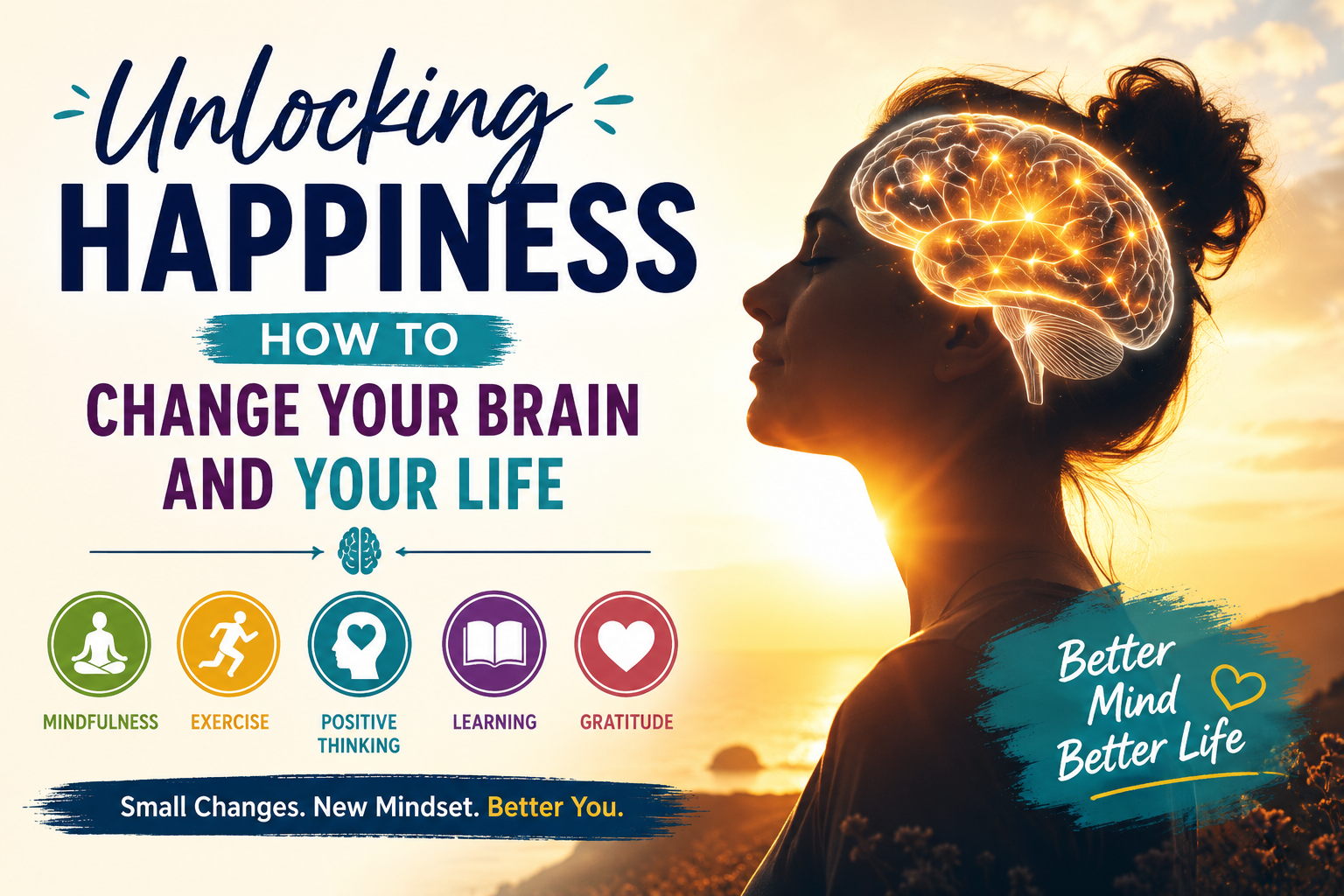
The human brain has an incredible ability called neuroplasticity, which means it can change, adapt, and rewire itself based on your thoughts and habits.
So the real question is not “Is happiness possible?”
It’s “Are you training your brain for it?”
What Does “Rewiring Your Brain” Really Mean?
Rewiring your brain doesn’t mean flipping a switch overnight. It means gradually changing your thought patterns so your brain starts responding differently to life.
Every time you:
- Practice gratitude
- Replace negativity with awareness
- You’re literally strengthening new neural pathways.
- Over time, these pathways become your default thinking style.
Why Your Brain Defaults to Negativity
If your mind often focuses on problems, fear, or stress—you’re not alone.
Your brain is naturally wired for survival, not happiness. This is called the negativity bias:
- You remember bad experiences more than good ones
- You focus on threats instead of opportunities
- You overthink worst-case scenarios
This helped humans survive in the past—but today, it often creates stress and anxiety.
- The good news?
- You can retrain it.
Is It Really Possible to Rewire Your Brain for Happiness?
Yes—but it requires consistency, patience, and awareness.
Think of your brain like a muscle:
- Negative thinking = habit
- Positive thinking = skill
- And like any skill, it improves with practice.
7 Practical Ways to Rewire Your Brain for Happiness
1. Practice Daily Gratitude
- Gratitude is one of the fastest ways to shift your mindset.
- Instead of focusing on what’s missing, focus on what’s already good.
Try this:
Write 3 things you’re grateful for every day.
2. Catch and Replace Negative Thoughts
You can’t stop negative thoughts—but you can change how you respond.
When a negative thought appears:
- Notice it
- Question it
- Replace it with a balanced thought
Example:
“I always fail” → “I didn’t succeed this time, but I can improve.”
3. Surround Yourself with Positivity
Your environment affects your mindset.
Limit:
- Negative news
- Toxic people
- Social media comparison
Increase:
- Motivational content
- Supportive people
- Learning resources
4. Train Your Brain with Repetition
Your brain learns through repetition.
The more you:
- Think positive
Act confidently
- Focus on solutions
- The stronger those neural pathways become.
5. Use Visualization
Your brain responds to imagination almost like reality.
Spend a few minutes daily:
- Visualizing your goals
- Seeing yourself happy and successful
- This trains your brain to expect positive outcomes.
6. Take Care of Your Body
Your mental state is deeply connected to your physical health.
Simple habits:
- Regular exercise
- Good sleep
- Healthy food
These improve mood and brain function naturally.
7. Be Patient with Yourself
- Rewiring your brain takes time.
- Some days you’ll feel positive.
- Some days you’ll fall back into old patterns.
That’s normal.
Progress matters more than perfection.
The Real Truth About Happiness
Happiness is not:
- Constant excitement
- A perfect life
- No problems
Real happiness is:
- Inner peace
- Emotional balance
- The ability to handle challenges calmly
- It’s something you build—not something you wait for.
Daily Routine to Train Your Brain for Happiness
Here’s a simple routine you can follow:
Morning:
- Set a positive intention
- Practice gratitude
Daytime:
- Stay aware of your thoughts
- Focus on solutions, not problems
Night:
- Reflect on your day
- Appreciate small wins
Small actions, repeated daily, create big change.