

- Introduction
- What Is Positive Thinking?
- Why Negative Thinking Can Hold You Back
- The Real Power of Positive Thinking
- How to Practice Positive Thinking in a Negative World
- Focus on What You Can Control
- Surround Yourself With Positive Influence
- Daily Habits That Strengthen a Positive Mindset
- Positive Thinking Does Not Mean Ignoring Reality
Introduction
In a world filled with stress, uncertainty, criticism, and constant negativity, maintaining a positive mindset can feel difficult. Negative news cycles, workplace pressure, social comparison, and personal challenges can all influence how we think and respond to life.
Yet positive thinking remains one of the most powerful tools for resilience, confidence, and growth.
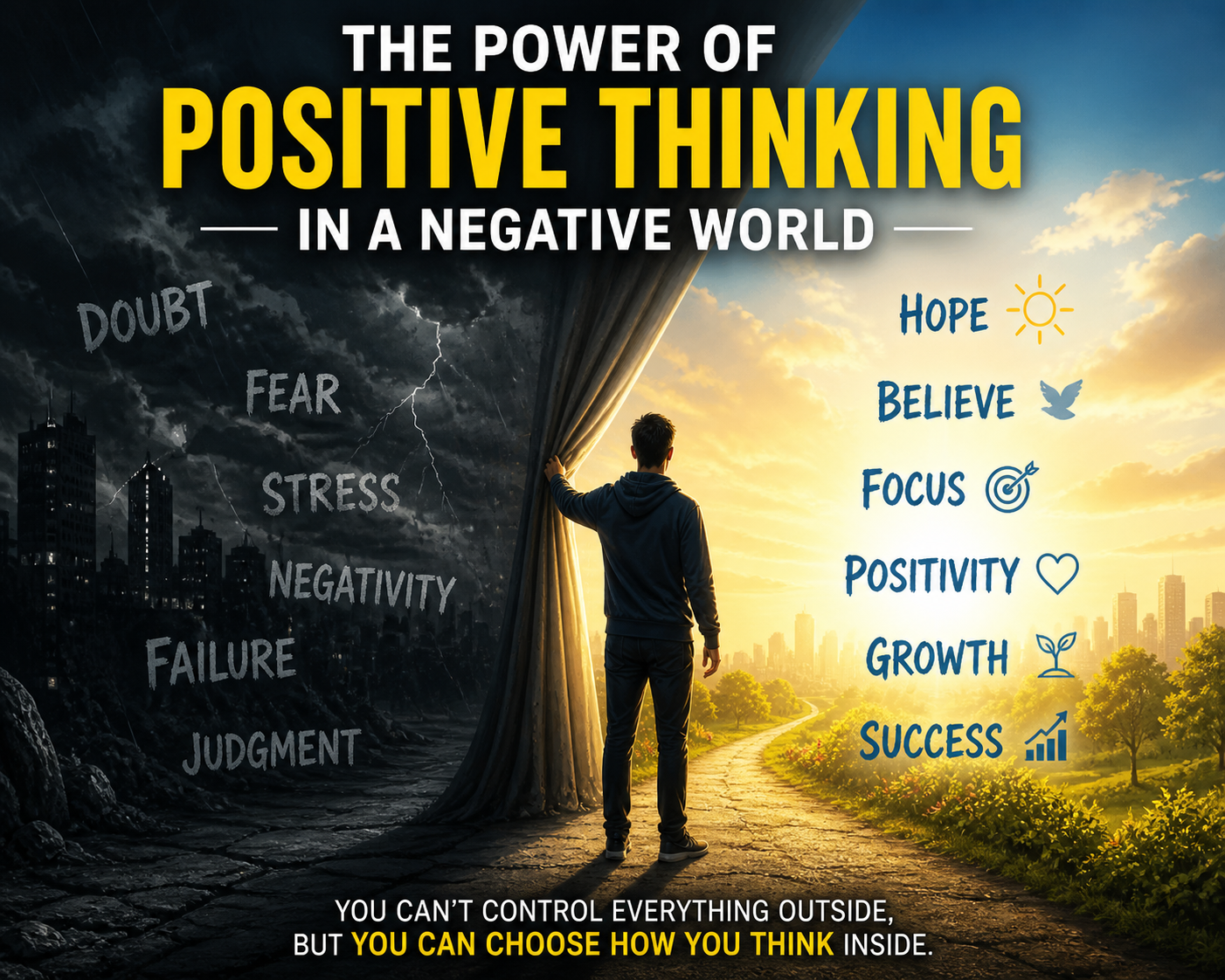
Positive thinking does not mean ignoring problems or pretending difficulties do not exist. It means choosing a constructive mindset, focusing on solutions, and believing challenges can be managed rather than allowing negativity to control your perspective.
In a negative world, positive thinking is not denial. It is strength.
What Is Positive Thinking?
Positive thinking is the practice of approaching life with an optimistic, solution-focused mindset.
It involves:
- Looking for opportunities in challenges
- Reframing setbacks as lessons
- Managing negative self-talk
- Focusing on what can be controlled
- Expecting progress, not perfection
Positive thinking shapes how you interpret experiences, make decisions, and handle adversity.
Why Negative Thinking Can Hold You Back
Persistent negative thinking can affect:
- Confidence
- Motivation
- Stress levels
- Relationships
- Productivity
- Mental well-being
Thoughts like “Nothing will work,” “I always fail,” or “Things never improve” can become limiting beliefs.
Over time, these beliefs can shape behavior and keep you stuck.
That is why mindset matters.
The Real Power of Positive Thinking
1. It Builds Resilience
Positive thinkers tend to recover faster from setbacks because they focus on solutions rather than staying trapped in problems.
Resilience grows when you believe challenges can be overcome.
2. It Improves Decision-Making
Fear-based thinking often leads to hesitation.
Positive thinking creates mental clarity, which supports better choices.
3. It Strengthens Confidence
Optimistic thinking helps you trust your ability to handle obstacles.
Confidence grows when your mindset supports action.
4. It Reduces Stress
A constructive outlook can lower mental tension and help you respond more calmly during pressure.
5. It Supports Growth
People with a positive mindset are often more open to learning, adapting, and pursuing opportunities.
How to Practice Positive Thinking in a Negative World
- Challenge Negative Self-Talk
- Notice inner thoughts.
Replace:
I can’t do this
With:
I can learn how to do this.
Shift internal language intentionally.
Focus on What You Can Control
You may not control external events, but you can control:
- Your response
- Your attitude
- Your effort
- Your habits
This shift is empowering. - Limit Negative Inputs
- Protect your mindset.
Reduce exposure to:
- Excessive negative news
Toxic conversations
- Constant comparison
- Draining digital content
What you consume influences how you think.
Practice Gratitude
Gratitude trains attention toward what is working.
Daily ask:
- What went well today?
- What am I thankful for?
- What progress have I made?
Gratitude strengthens perspective.
Surround Yourself With Positive Influence
Spend time with people, ideas, and environments that encourage growth rather than reinforce negativity.
Positive energy is often contagious.
Use Setbacks as Feedback
Instead of seeing challenges as proof of failure, view them as lessons.
Ask:
- What can this teach me?
- How can I improve from this?
- That is growth thinking.
Daily Habits That Strengthen a Positive Mindset
Build positivity through small daily actions:
- Start the day with a clear intention
Read something uplifting
- Practice affirming self-talk
- Focus on one solution when problems arise
- Celebrate small wins
- Reflect on progress, not only problems
Consistency shapes mindset.
Positive Thinking Does Not Mean Ignoring Reality
This is important.
Positive thinking does not mean:
- Avoiding hard truths
- Suppressing emotions
- Pretending everything is perfect
It means facing reality while choosing a constructive response.
That is emotional strength.