

- The Global Impact of the Monsoon Season
- How Technology Helps During the Monsoon Season
- 1. Advanced Weather Forecasting
- 2. Early Warning Systems
- 3. Satellite Technology
- 4. Artificial Intelligence and Big Data
- 5. Smart Transportation and GPS
- 6. Technology for Flood Monitoring
- 7. Drones and Robotics for Disaster Response
- 8. Smart Homes and IoT Devices
- 9. Renewable Energy and Backup Power
- 10. Digital Communication During Emergencies
- The Future of Technology During the Monsoon Season
- Final words
The monsoon season is an important weather phenomenon that affects millions of people around the world. While monsoons are strongly associated with countries such as India, Pakistan, Bangladesh, Sri Lanka, and parts of Southeast Asia, seasonal rainfall also impacts regions across Africa, Australia, East Asia, and other parts of the world.
Monsoon rains bring water for agriculture, drinking, and ecosystems. However, heavy rainfall can also cause flooding, landslides, transportation problems, power outages, and other challenges. As a result, technology is playing an increasingly important role in helping communities prepare for, manage, and recover from monsoon-related weather events.
The Global Impact of the Monsoon Season
The effects of monsoon weather vary from region to region. In some areas, monsoon rainfall supports agriculture and provides essential water resources. In other regions, excessive rainfall can lead to flash floods, urban flooding, landslides, and damage to infrastructure.
Because weather patterns are becoming increasingly unpredictable, technology is helping governments, organizations, and individuals respond more effectively to changing weather conditions.
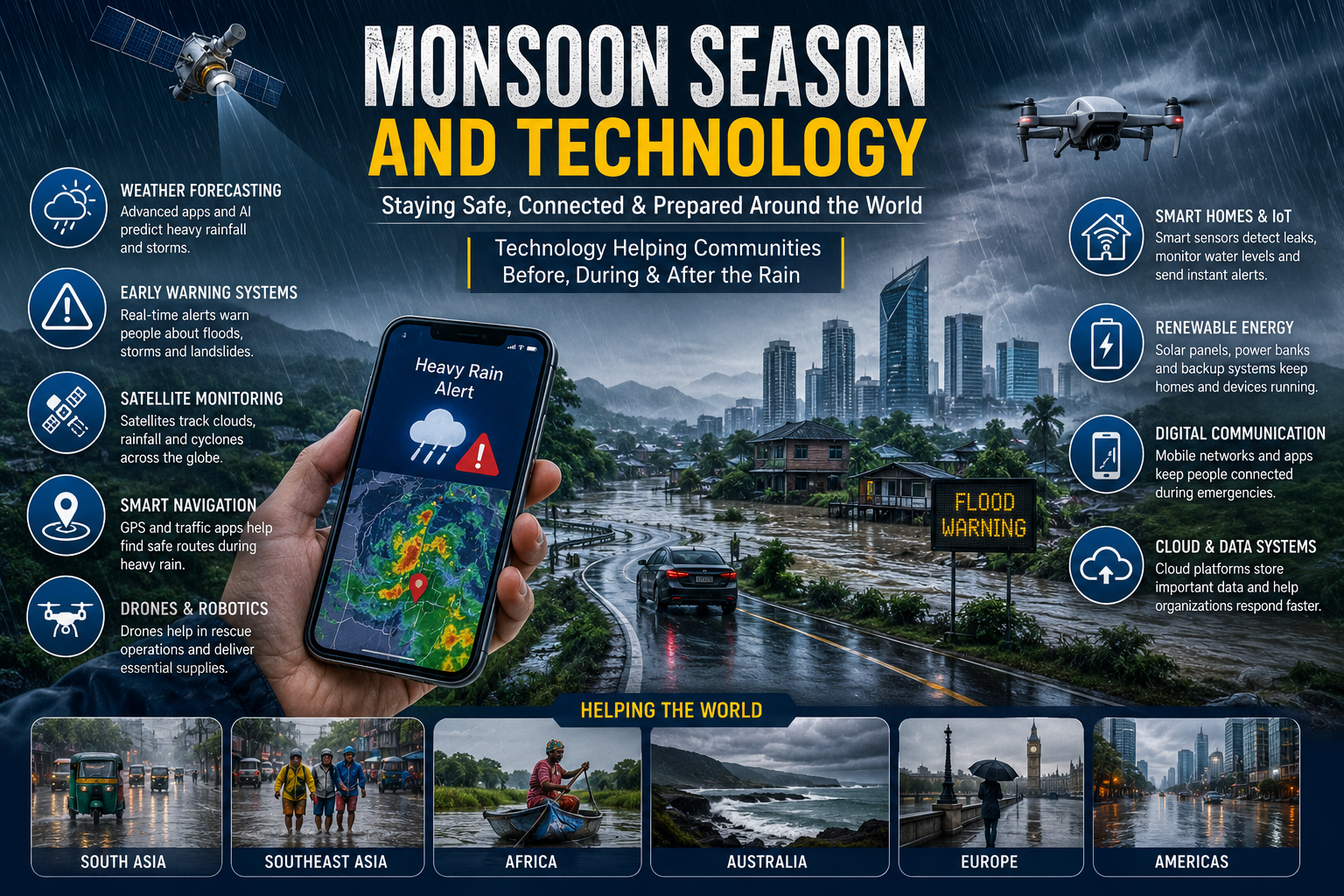
How Technology Helps During the Monsoon Season
1. Advanced Weather Forecasting
Modern weather forecasting technology uses satellites, radar systems, artificial intelligence, and advanced computer models to monitor weather conditions.
These technologies help predict:
- Heavy rainfall
- Tropical storms
- Flood risks
- Strong winds
- Landslides
- Severe weather conditions
Accurate forecasts allow people to prepare in advance and help authorities issue timely warnings.
2. Early Warning Systems
Early warning systems are among the most important technologies used during the monsoon season. Governments and weather organizations can send emergency alerts through mobile phones, television, websites, and social media.
These alerts can warn people about dangerous weather conditions and provide important safety instructions.
3. Satellite Technology
Satellites monitor clouds, rainfall, storms, and large-scale weather patterns across the world. This information helps meteorologists track monsoon systems and predict how they may develop.
Satellite technology is particularly valuable in remote areas where traditional weather monitoring systems may be limited.
4. Artificial Intelligence and Big Data
Artificial intelligence is transforming weather prediction and disaster management. AI systems can analyze huge amounts of weather data and identify patterns that may help improve forecasts.
In the future, AI may help predict flooding and other monsoon-related risks more quickly and accurately.
5. Smart Transportation and GPS
Heavy rainfall can cause road closures, traffic congestion, and flooded streets. GPS and navigation technology provide real-time information about traffic and road conditions.
Smart transportation systems can help people find safer alternative routes and assist emergency services in reaching affected communities.
6. Technology for Flood Monitoring
Sensors, cameras, drones, and water-level monitoring systems can help track rising water levels. This information allows authorities to respond more quickly when flood risks increase.
Smart city technology can also help manage drainage systems and monitor areas that are vulnerable to flooding.
7. Drones and Robotics for Disaster Response
Drones are increasingly being used during natural disasters. They can provide aerial images of flooded areas, damaged roads, and isolated communities.
In some situations, drones can help rescue teams locate people and deliver essential supplies to areas that are difficult to reach.
8. Smart Homes and IoT Devices
The Internet of Things (IoT) is also helping people protect their homes during extreme weather. Smart water sensors can detect leaks, while security cameras can help homeowners monitor their properties remotely.
Smart devices can send instant alerts to smartphones when unusual conditions are detected.
9. Renewable Energy and Backup Power
Heavy storms can sometimes damage power infrastructure and cause electricity outages. Solar energy systems, battery storage, power banks, and portable generators can help provide backup power.
Renewable energy technology is particularly useful in remote communities where access to reliable electricity may be limited.
10. Digital Communication During Emergencies
During emergencies, communication is extremely important. Smartphones, mobile networks, satellite communication, and internet-based services help people stay in contact with family members, emergency services, and authorities.
Social media platforms can also help spread important safety information quickly during severe weather events.
The Future of Technology During the Monsoon Season
The future of monsoon management will likely depend on smarter and more connected technologies. AI-powered weather forecasting, smart cities, advanced sensors, satellite monitoring, and automated emergency systems may help communities prepare for extreme weather more effectively.
As climate change continues to influence weather patterns around the world, the need for advanced technology will become even more important.
Final words
The relationship between monsoon season and technology is becoming increasingly important around the world. From advanced weather forecasting and satellite monitoring to artificial intelligence, GPS, drones, smart homes, and emergency communication, technology is helping people better understand and respond to monsoon weather.
Although monsoon rainfall can create serious challenges, modern technology provides powerful tools for improving safety, protecting communities, supporting agriculture, and managing natural disasters. As innovation continues, technology will play an even greater role in helping the world prepare for future monsoon seasons.