Introduction
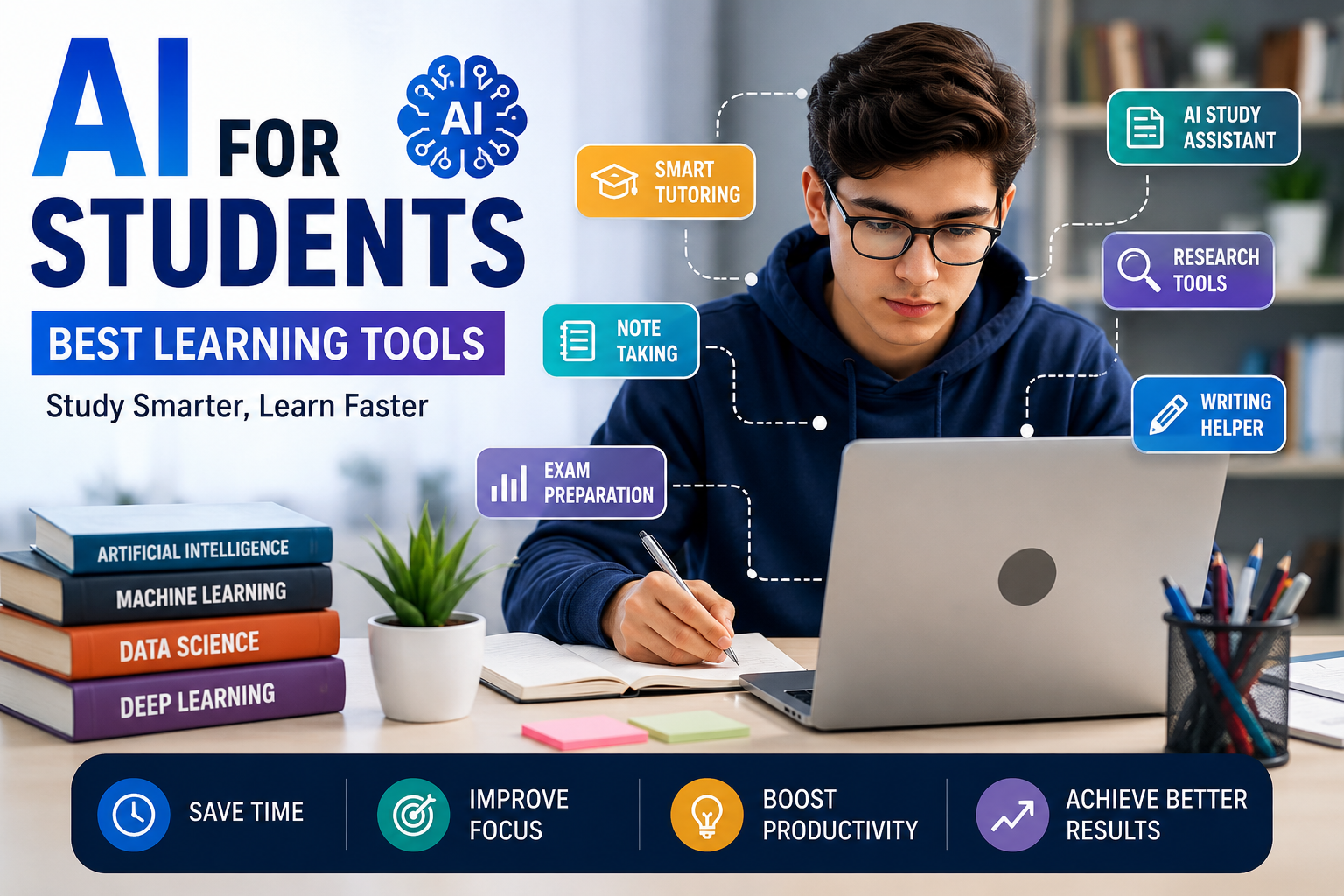
Artificial Intelligence (AI) has become one of the most valuable learning companions for students. From solving complex math problems to improving writing skills and organizing study schedules, AI-powered tools help students learn faster, stay organized, and achieve better academic results.
Whether you’re a high school student, a university learner, or preparing for competitive exams, AI tools can save time, enhance understanding, and make studying more interactive. In this article, we’ll explore the best AI for Students tools in 2026 and how each one can support your education.
Why Students Should Use AI
AI for Students is changing the way we learn by providing personalized support and instant assistance. Some of the biggest benefits include:
- 24/7 learning assistance
- Faster research and information gathering
- Better writing and grammar correction
- Personalized study plans
- Improved productivity and time management
- Interactive learning experiences
- Assistance with coding, mathematics, and science
While AI is a powerful educational resource, it works best when used to support learning rather than replace independent thinking.
Best AI Learning Tools for Students
1. ChatGPT
Best For: Homework help, writing, coding, brainstorming, and research.
ChatGPT is one of the most versatile AI assistants available. Students can ask questions, summarize lengthy articles, understand difficult concepts, generate practice quizzes, write essays, improve grammar, and even receive coding assistance.
Features
- Explains difficult topics in simple language
- Essay writing assistance
- Programming help
- Math explanations
- Language learning support
- Research summaries
Ideal For: Students in nearly every subject.
2. Grammarly
Best For: Writing improvement.
Grammarly helps students write clear, professional, and grammatically correct assignments. It checks grammar, spelling, punctuation, clarity, tone, and style in real time.
Features
- Grammar correction
- Plagiarism detection (Premium)
- Writing suggestions
- Vocabulary enhancement
- Tone analysis
Perfect for essays, reports, emails, and research papers.
3. Notion AI
Best For: Note-taking and study organization.
Notion AI helps students organize class notes, summarize lectures, create study plans, and manage assignments.
Features
- Smart note summaries
- Task management
- Study planner
- Project organization
- AI writing assistant
Excellent for students managing multiple courses.
4. Google Gemini
Best For: Research and brainstorming.
Google Gemini combines AI with Google’s search capabilities, helping students gather reliable information, summarize complex topics, and generate ideas for assignments.
Features
- Research assistance
- Content summaries
- Coding help
- Image understanding
- Brainstorming ideas
5. Microsoft Copilot
Best For: Productivity and Office documents.
Students using Microsoft Word, Excel, and PowerPoint can use Copilot to generate reports, presentations, and data summaries.
Features
- PowerPoint creation
- Excel analysis
- Word document drafting
- Email writing
- Research support
6. Khanmigo
Best For: Personalized tutoring.
Khanmigo provides interactive tutoring by guiding students through problems rather than simply giving answers. It encourages understanding and critical thinking.
Features
- Personalized tutoring
- Math guidance
- Science explanations
- Writing support
- Step-by-step learning
7. Quizlet AI
Best For: Exam preparation.
Quizlet uses AI to create flashcards, quizzes, and personalized study sessions.
Features
- Flashcards
- Practice tests
- Memorization techniques
- Learning games
- Adaptive study plans
Great for preparing for exams efficiently.
8. Photomath
Best For: Mathematics.
Photomath allows students to scan math problems using their phone camera and receive detailed, step-by-step solutions.
Features
- Algebra
- Calculus
- Geometry
- Graph explanations
- Instant solutions
Ideal for students struggling with mathematics.
9. Duolingo Max
Best For: Language learning.
Powered by AI, Duolingo Max offers interactive conversations, grammar explanations, and personalized lessons.
Features
- Speaking practice
- Grammar coaching
- Vocabulary building
- Personalized lessons
- Interactive exercises
Excellent for learning English and many other languages.
10. Perplexity AI
Best For: Academic research.
Perplexity AI provides concise answers while citing sources, making it a useful research companion for essays and projects.
Features
- Source-backed answers
- Research summaries
- Citation assistance
- Fast information retrieval
- Follow-up questioning
Tips for Using AI Responsibly
AI should enhance learning rather than replace it. Keep these best practices in mind:
- Verify important facts using trusted academic sources.
- Use AI to understand concepts instead of copying answers.
- Rewrite AI-generated content in your own words.
- Follow your school’s policies on AI use.
- Always cite sources where required.
- Protect your personal information when using online tools.
Responsible use helps you build genuine knowledge and maintain academic integrity.
Which AI Tool Is Best?
| Need | Recommended Tool |
|---|---|
| Homework Help | ChatGPT |
| Writing | Grammarly |
| Research | Google Gemini, Perplexity AI |
| Math | Photomath |
| Study Notes | Notion AI |
| Office Assignments | Microsoft Copilot |
| Exam Preparation | Quizlet AI |
| Language Learning | Duolingo Max |
| Tutoring | Khanmigo |
Final words
Artificial Intelligence is transforming education by making learning more personalized, efficient, and accessible. Whether you need help understanding difficult concepts, improving your writing, solving math problems, organizing notes, or preparing for exams, today’s AI-powered learning tools can significantly enhance your academic experience.
The key to success is using AI responsibly. Treat these tools as study partners that help you think more deeply, stay organized, and learn independently. By combining AI assistance with your own effort and curiosity, you can improve both your skills and your confidence throughout your educational journey.
As AI continues to evolve, students who learn how to use these technologies effectively will be better prepared for the future of education and the workplace.