

- Introduction
- Understanding Women Empowerment in 2026
- Importance of Women Empowerment
- Education: The Foundation of Empowerment
- Economic Empowerment
- Digital Technology and Artificial Intelligence
- Healthcare and Well-being
- Women and Climate Change
- Challenges Facing Women in 2026
- International Initiatives Supporting Women Empowerment in 2026
- Case Study: Digital Entrepreneurship Among Women Empowerment in 2026
- Recommendations Women Empowerment in 2026
- Critical Analysis Women Empowerment in 2026
- Conclusion about Women Empowerment in 2026
- References based on Women Empowerment in 2026
Introduction
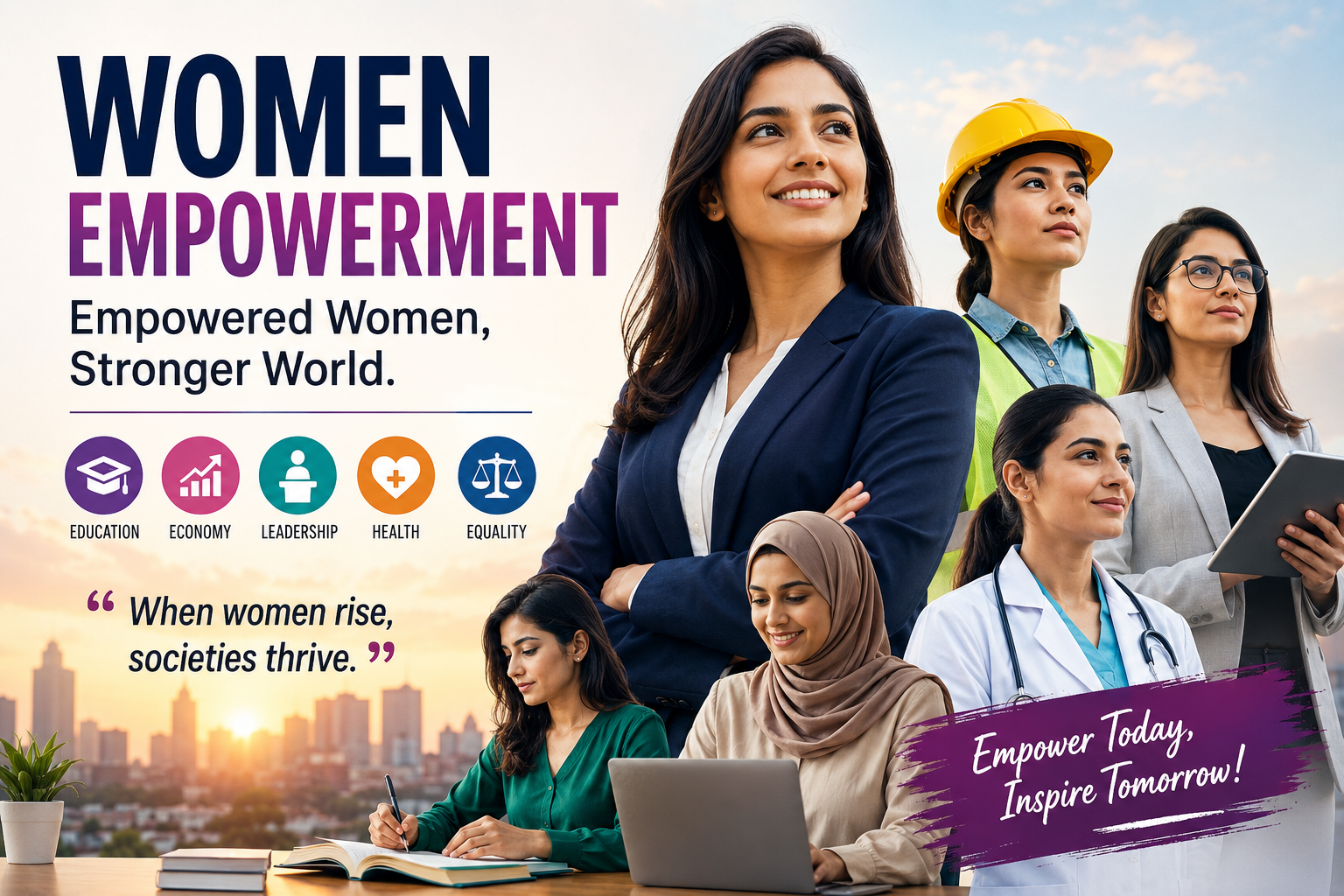
Women Empowerment in 2026 continues to be one of the most significant drivers of social progress, economic development, and sustainable growth across the world. As of July 2026, governments, international organizations, businesses, and civil society are making greater efforts to ensure that women and girls have equal opportunities to participate in education, employment, leadership, healthcare, and decision-making. Despite remarkable progress over the past few decades, millions of women still face discrimination, unequal pay, gender-based violence, limited access to quality education, and barriers to financial independence.
Women empowerment is more than improving the lives of women—it strengthens families, boosts economies, promotes innovation, and creates more peaceful and resilient societies. Countries that invest in women experience faster economic growth, healthier communities, and better educational outcomes for future generations. Therefore, empowering women is not only a human rights issue but also a strategic investment in global prosperity.
Understanding Women Empowerment in 2026
Women empowerment refers to the process of providing women and girls with the freedom, confidence, resources, and opportunities to make independent decisions regarding their personal, social, political, and economic lives. It involves eliminating discrimination and ensuring equal access to education, employment, healthcare, technology, leadership, and justice.
Empowerment allows women to participate equally in society, contribute to economic development, and influence decisions that shape their communities. It also encourages self-confidence, financial independence, leadership skills, and equal representation in every sector.
The Current Global Situation Women Empowerment in (July 2026)
Although gender equality has improved worldwide, significant challenges remain.
Many countries have introduced stronger policies supporting women’s rights, equal pay, workplace safety, maternity protection, and leadership opportunities. More women than ever before are completing higher education, starting businesses, entering science and technology careers, and serving in political offices.
However, global reports continue to highlight persistent issues such as:
- Gender pay gaps across many industries.
- Underrepresentation of women in senior leadership positions.
- Limited financial access in developing countries.
- Digital inequality affecting millions of women.
- Gender-based violence and online harassment.
- Unequal distribution of unpaid household responsibilities.
According to recent international estimates, women still perform the majority of unpaid care work worldwide, while many remain excluded from financial systems and digital technologies that are increasingly essential for economic participation.
Importance of Women Empowerment
Empowering women benefits every part of society. When women receive equal opportunities, communities become healthier, economies grow stronger, and future generations enjoy better living standards.
The importance of women empowerment includes:
- Promoting gender equality and social justice.
- Increasing national economic productivity.
- Reducing poverty and unemployment.
- Improving maternal and child healthcare.
- Encouraging entrepreneurship and innovation.
- Strengthening democratic participation.
- Creating inclusive workplaces.
- Supporting sustainable development.
- Reducing domestic violence through education and legal protection.
- Building stronger families and communities.
Education: The Foundation of Empowerment
Education remains the most effective tool for empowering women. Educated women are more likely to secure better employment, earn higher incomes, make informed healthcare decisions, and actively participate in community leadership.
Modern education now extends beyond traditional classrooms. Digital learning platforms, online universities, artificial intelligence learning tools, and virtual classrooms have opened new opportunities for women living in remote areas.
Governments and educational institutions are increasingly investing in:
- Scholarships for girls.
- STEM education.
- Digital literacy programs.
- Technical and vocational training.
- Adult education initiatives.
- Online certification programs.
These initiatives help prepare women for future careers in rapidly changing industries.
Economic Empowerment
Financial independence is one of the strongest forms of empowerment. Women with stable incomes have greater decision-making power within families and communities.
Economic empowerment includes:
- Equal employment opportunities.
- Fair wages.
- Entrepreneurship support.
- Access to loans and banking services.
- Financial literacy education.
- Digital payment systems.
- Investment opportunities.
Women-owned businesses continue to grow rapidly in 2026, supported by e-commerce platforms, online marketplaces, digital marketing, and social media.
Small businesses owned by women contribute significantly to local economies by creating jobs and encouraging innovation.
Digital Technology and Artificial Intelligence
Technology has become a major driver of women’s empowerment.
Artificial Intelligence (AI), remote work, freelancing platforms, digital banking, and online education have created opportunities for millions of women to earn income from home.
Women are increasingly working as:
- Software developers
- Digital marketers
- Content creators
- Graphic designers
- Virtual assistants
- Data analysts
- Online educators
- AI specialists
- Cybersecurity professionals
However, challenges remain, including digital literacy gaps, online harassment, algorithmic bias, and unequal internet access in developing regions.
Ensuring women have equal access to digital technologies is becoming a global priority.
Healthcare and Well-being
Access to quality healthcare remains essential for women’s empowerment.
Healthcare initiatives focus on:
- Maternal healthcare
- Reproductive rights
- Mental health support
- Cancer screening
- Nutrition programs
- Family planning
- Preventive healthcare
Many countries are also using telemedicine services to improve healthcare access for women living in rural communities.
Improved healthcare contributes directly to higher productivity, better education outcomes, and stronger economic participation.
Women Empowerment in Leadership
Women’s participation in leadership has increased significantly over recent years.
Today, women serve as:
- Presidents
- Prime Ministers
- CEOs
- Judges
- Scientists
- University leaders
- Entrepreneurs
- Technology executives
Research consistently shows that organizations with diverse leadership often demonstrate stronger innovation, better governance, and improved financial performance.
Although progress has been made, women remain underrepresented in senior leadership positions globally.
Women and Climate Change
Climate change affects women differently, especially those living in vulnerable communities.
Women often face greater risks related to:
- Food insecurity
- Water shortages
- Natural disasters
- Agricultural losses
- Climate migration
At the same time, women play a critical role in environmental protection by leading conservation projects, sustainable agriculture, renewable energy initiatives, and climate adaptation programs.
Increasing women’s participation in climate policy improves long-term sustainability.
Challenges Facing Women in 2026
Despite global progress, many barriers continue to limit women’s full participation in society.
Major challenges include:
- Gender discrimination.
- Unequal pay.
- Workplace harassment.
- Domestic violence.
- Child marriage in some regions.
- Human trafficking.
- Limited political representation.
- Digital inequality.
- Cultural stereotypes.
- Lack of financial inclusion.
- Limited property ownership rights.
- Online abuse and cyber harassment.
Addressing these challenges requires coordinated efforts from governments, businesses, educational institutions, and communities.
International Initiatives Supporting Women Empowerment in 2026
Several international organizations continue to promote women’s rights worldwide.
Major initiatives include:
- United Nations Sustainable Development Goal 5 (Gender Equality).
- Convention on the Elimination of All Forms of Discrimination Against Women (CEDAW).
- UN Women global programs.
- International Labour Organization (ILO) Equal Pay Convention.
- Women Empowerment Principles (WEPs).
- World Bank Gender Strategy.
- UNESCO Girls’ Education Programs.
These initiatives encourage governments to adopt policies promoting equality, education, healthcare, and economic participation.
Case Study: Digital Entrepreneurship Among Women Empowerment in 2026
One of the most significant developments in 2026 is the rise of women-led digital businesses.
Across Asia, Africa, Europe, and Latin America, women are using platforms such as Shopify, Etsy, Amazon, TikTok Shop, Facebook Marketplace, and other e-commerce platforms to launch successful businesses.
Digital entrepreneurship has enabled women to:
- Earn independent incomes.
- Reach international customers.
- Work remotely.
- Balance family responsibilities.
- Access global markets with minimal investment.
Government grants and private-sector accelerator programs continue supporting women-owned startups through funding, mentorship, and digital skills training.
Recommendations Women Empowerment in 2026
To accelerate women’s empowerment globally, governments and organizations should:
- Invest more in girls’ education.
- Close the gender pay gap.
- Increase women’s participation in leadership.
- Improve access to digital technologies.
- Expand financial inclusion programs.
- Strengthen laws against gender-based violence.
- Promote STEM education for girls.
- Support women entrepreneurs through grants and mentoring.
- Improve maternal and mental healthcare services.
- Encourage equal participation in political decision-making.
Critical Analysis Women Empowerment in 2026
Women’s empowerment has made remarkable progress over the past decade, but challenges remain deeply rooted in social, cultural, and economic systems. While many empowerment initiatives focus on increasing employment and entrepreneurship, sustainable empowerment also requires structural reforms that eliminate discrimination, improve legal protections, and ensure equal access to education, healthcare, technology, and leadership opportunities.
Emerging technologies such as Artificial Intelligence offer tremendous opportunities but also risk reinforcing existing inequalities if women are excluded from digital transformation. Therefore, policymakers must prioritize inclusive technological development alongside traditional empowerment strategies.
Achieving genuine gender equality requires collaboration between governments, educational institutions, businesses, international organizations, and local communities.
Conclusion about Women Empowerment in 2026
Women empowerment remains one of the most powerful foundations for achieving sustainable development, economic growth, and social justice. In July 2026, the world has witnessed encouraging progress through improved education, greater workforce participation, technological advancement, and stronger legal protections for women. Nevertheless, millions of women continue to face discrimination, violence, unequal opportunities, and digital exclusion.
Empowering women is not solely about ensuring equal rights; it is about unlocking the full potential of half of the world’s population. Societies that invest in women create healthier families, stronger economies, more innovative businesses, and more peaceful communities.
The journey toward gender equality requires continuous commitment, inclusive policies, educational investment, and collective action. By working together, governments, organizations, and individuals can build a future where every woman has the opportunity to lead, succeed, and contribute fully to society.
References based on Women Empowerment in 2026
- United Nations – Sustainable Development Goals (SDG 5)
- UN Women (2025–2026 Reports)
- World Bank Gender Strategy
- UNESCO Global Education Monitoring Report
- International Labour Organization (ILO)
- World Economic Forum – Global Gender Gap Reports
- OECD Gender Equality Reports
- World Health Organization (WHO)
- UNICEF – Girls’ Education Reports
- International Monetary Fund (IMF) Gender and Economic Growth Publications