

- Introduction
- What Is Positive Thinking?
- What Is Toxic Positivity?
- Common Examples of Toxic Positivity
- The Key Difference Between Positive Thinking and Toxic Positivity
- Why Toxic Positivity Can Be Harmful
- The Benefits of Healthy Positive Thinking
- Signs You May Be Practicing Toxic Positivity
- How to Practice Healthy Positivity Instead
- Final Thoughts
Introduction
In today’s fast-paced world, positivity is often promoted as the key to happiness and success. Social media is filled with motivational quotes telling people to “stay positive,” “good vibes only,” or “never give up.” While maintaining a positive outlook can improve mental well-being, there is a major difference between healthy positivity and toxic positivity.
Understanding this difference is important because not all positivity is helpful. Sometimes, forcing happiness or ignoring painful emotions can do more harm than good. Real emotional strength comes from acknowledging difficult feelings while still moving forward with hope and resilience.
This article explores the difference between positive thinking and toxic positivity, how each affects mental health, and how to develop a balanced mindset.
What Is Positive Thinking?
Positive thinking is the practice of focusing on solutions, opportunities, and hope while still accepting reality. It does not mean ignoring problems or pretending everything is perfect. Instead, it means approaching life’s challenges with a constructive and realistic attitude.
Healthy positive thinking encourages people to:
- Learn from setbacks
- Stay hopeful during difficult times
- Build emotional resilience
- Focus on growth and improvement
- Maintain self-confidence
Positive thinking helps individuals manage stress more effectively and improve overall emotional well-being. It creates a mindset that supports progress rather than fear.
Examples of Healthy Positive Thinking
- “This situation is difficult, but I can learn from it.”
- “I feel stressed right now, and that’s okay. I will take things one step at a time.”
- “Failure does not define me.”
- “I may not control everything, but I can control my response.”
This type of thinking allows space for both optimism and honesty.
What Is Toxic Positivity?
Toxic positivity is the belief that people should remain positive no matter how difficult or painful a situation may be. It dismisses negative emotions and pressures people to hide their real feelings.
Instead of supporting emotional healing, toxic positivity often invalidates genuine human experiences such as sadness, grief, fear, anger, or disappointment.
Toxic positivity usually sounds encouraging on the surface, but it can make people feel guilty for struggling emotionally.
Common Examples of Toxic Positivity
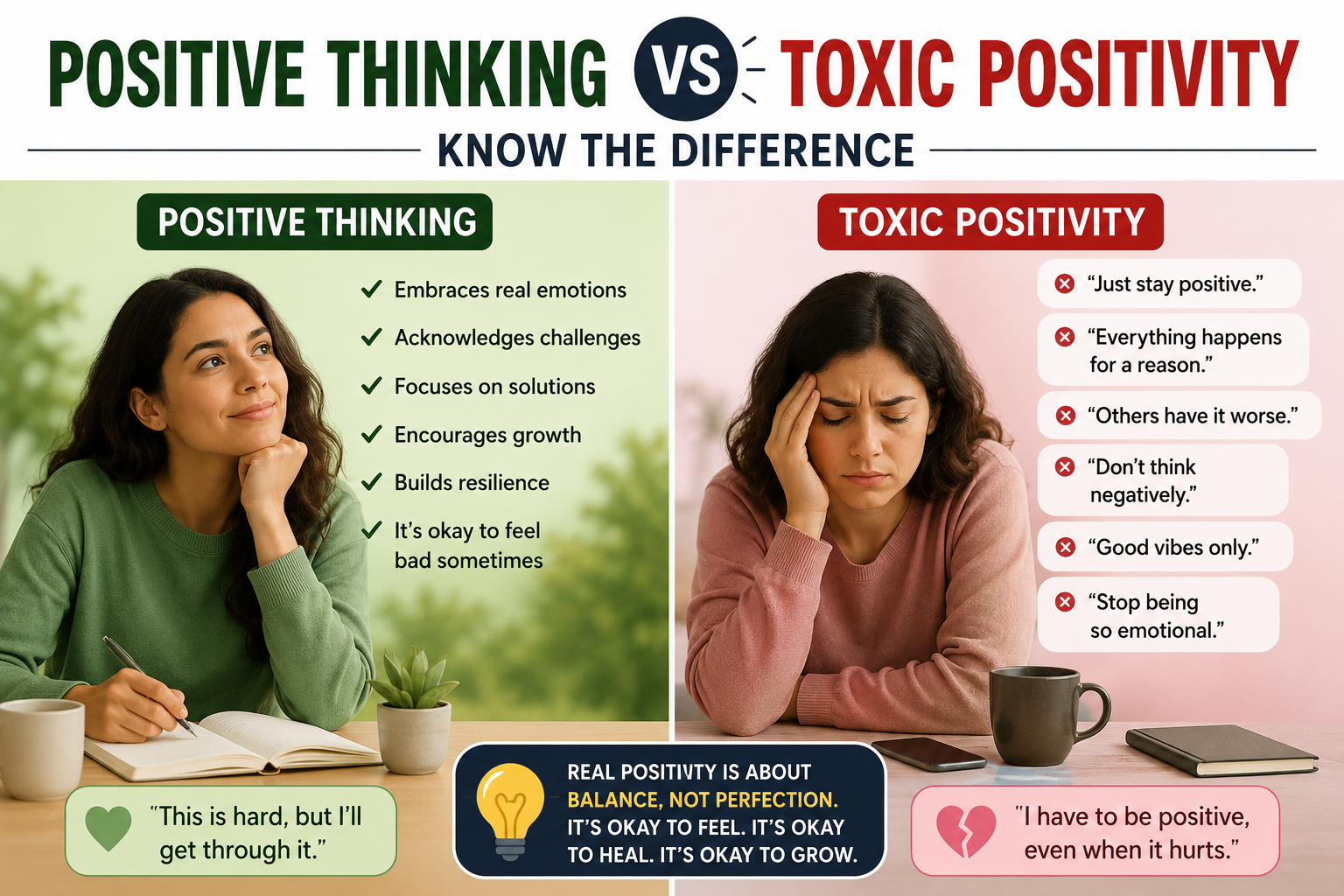
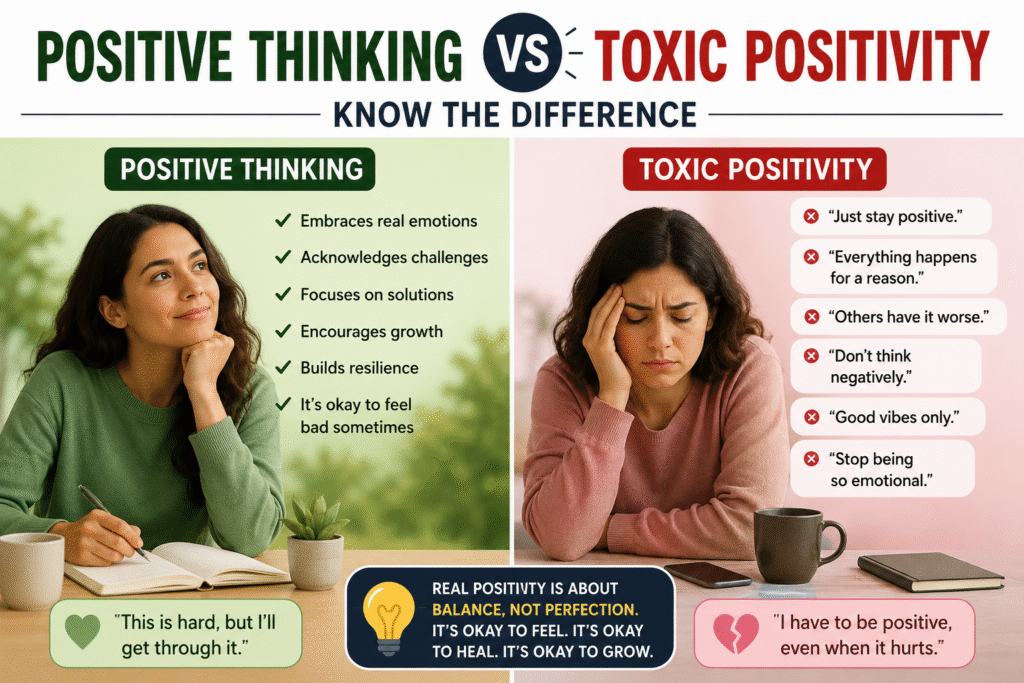
- “Just stay positive.”
- “Everything happens for a reason.”
- “Others have it worse.”
- “Don’t think negatively.”
- “Good vibes only.”
- “Stop being so emotional.”
These statements may appear supportive, but they often ignore the emotional reality a person is facing.
The Key Difference Between Positive Thinking and Toxic Positivity
The main difference lies in emotional acceptance.
| Positive Thinking | Toxic Positivity |
|---|---|
| Accepts difficult emotions | Rejects negative emotions |
| Encourages healthy coping | Forces fake happiness |
| Focuses on realistic optimism | Promotes unrealistic positivity |
| Supports emotional healing | Creates emotional suppression |
| Allows vulnerability | Shames emotional honesty |
Positive thinking says:
“It’s okay to feel hurt, and things can still improve.”
Toxic positivity says:
“You should not feel hurt at all.”
This distinction is critical for emotional health.
Why Toxic Positivity Can Be Harmful
While positivity itself is beneficial, toxic positivity can negatively impact mental and emotional well-being.
1. Emotional Suppression
When people feel pressured to stay positive all the time, they may suppress emotions instead of processing them. Ignored emotions often return stronger later.
2. Increased Stress and Anxiety
Pretending to be happy can create internal pressure and emotional exhaustion. People may feel isolated because they cannot express their true feelings.
3. Damaged Relationships
Toxic positivity can make conversations feel dismissive. Instead of feeling understood, people may feel unheard or judged.
4. Reduced Self-Awareness
Avoiding uncomfortable emotions prevents personal growth. Difficult feelings often carry important lessons about needs, boundaries, and healing.
The Benefits of Healthy Positive Thinking
Healthy optimism has many proven emotional and psychological benefits.
1.Better Stress Management
Positive thinkers tend to approach challenges calmly and focus on solutions instead of panic.
2.Improved Mental Health
Balanced optimism can reduce feelings of hopelessness and improve emotional resilience.
3.Stronger Relationships
People who communicate honestly while remaining hopeful build deeper emotional connections.
4.Greater Motivation
Positive thinking supports persistence and confidence during setbacks.
Signs You May Be Practicing Toxic Positivity
You may unknowingly fall into toxic positivity if you:
- Feel guilty for being sad or stressed
- Avoid discussing difficult emotions
- Constantly tell yourself to “just be happy”
- Dismiss other people’s pain with quick motivational phrases
- Pretend everything is okay when it is not
Recognizing these habits is the first step toward healthier emotional balance.
How to Practice Healthy Positivity Instead
Healthy positivity is about balance, not perfection. Here are practical ways to build a realistic and emotionally healthy mindset.
1.Acknowledge Your Feelings
Allow yourself to experience emotions without judgment. Feeling sad, frustrated, or anxious is part of being human.
2.Use Supportive Self-Talk
Replace harsh inner criticism with compassionate encouragement.
Instead of:
“I shouldn’t feel this way.”
Try:
“My feelings are valid, and I can work through them.”
3.Focus on Solutions
Positive thinking does not ignore problems. It helps you focus on constructive actions and possible improvements.
4.Listen Without Fixing
When supporting others, avoid rushing to force positivity. Sometimes people simply need empathy and understanding.
5.Practice Gratitude Realistically
Gratitude is powerful when it coexists with honesty. You can appreciate good things while still acknowledging struggles.
Final Thoughts
Positive thinking can be a powerful tool for emotional strength, resilience, and personal growth. However, positivity becomes harmful when it denies real emotions or pressures people to hide their pain.
True emotional wellness is not about pretending to be happy all the time. It is about accepting life’s ups and downs with honesty, self-awareness, and hope.
By understanding the difference between positive thinking and toxic positivity, we can create healthier relationships with ourselves and others. Real positivity does not erase pain — it helps us move through it with strength and compassion.