

- Why Traditional Passwords Are No Longer Secure
- What Is Passwordless Authentication?
- Passkeys: The Next Generation of Secure Login
- Biometrics Are Becoming the New Standard
- Why Two-Factor Authentication Is Still Important
- Why Major Technology Companies Are Eliminating Passwords
- How Passwordless Authentication Is Transforming Online Banking
- Business Benefits of Passwordless Authentication
- Does Passwordless Authentication Protect User Privacy?
- Challenges of Moving Beyond Passwords
- What Passwordless Authentication Means for Pakistan
- The Future of Passwordless Authentication
- Conclusion
For decades, passwords have been the foundation of online security. From email accounts and online banking to social media and cloud storage, almost every digital service has relied on usernames and passwords to verify user identity.
However, today’s cybersecurity landscape has changed dramatically. Weak passwords, password reuse, phishing attacks, and massive data breaches have exposed billions of user accounts worldwide. As cybercriminals become more sophisticated, passwords alone are no longer enough to protect sensitive information.
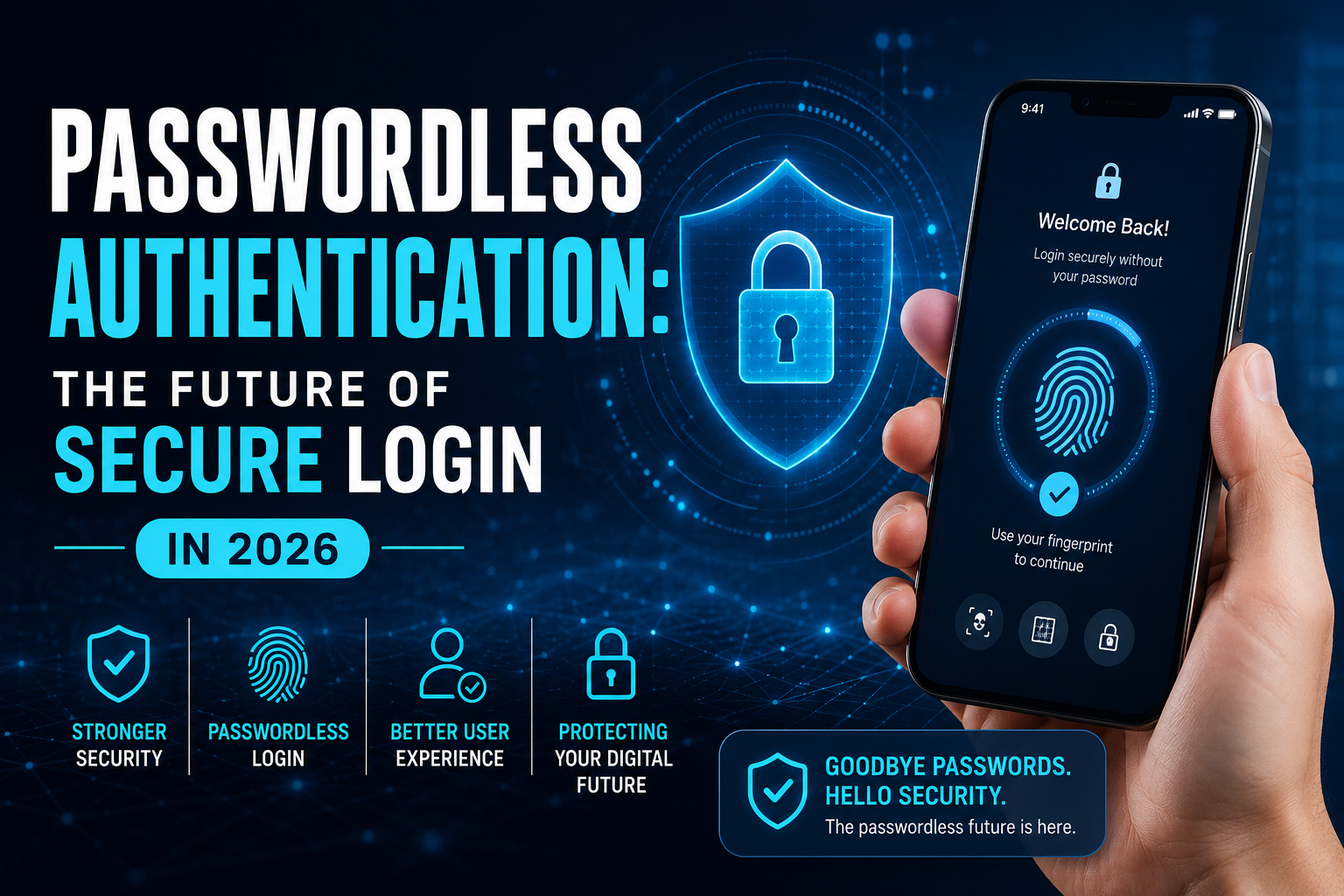
This is why the technology industry is rapidly moving toward passwordless authentication—a modern approach that replaces traditional passwords with passkeys, biometrics, and cryptographic security. While passwords won’t disappear overnight, their role is shrinking as more secure authentication methods become the new standard.
Why Traditional Passwords Are No Longer Secure
Passwords were designed for a much simpler internet. Today, the average person manages dozens—or even hundreds—of online accounts. Remembering a unique password for each account is difficult, causing many users to reuse the same credentials across multiple websites.
Unfortunately, this creates a major security risk. If one website suffers a data breach, attackers can use stolen usernames and passwords to access other accounts using the same credentials.
Modern cyberattacks commonly include:
- Phishing emails
- Fake login pages
- Malware and keyloggers
- Credential stuffing attacks
- Social engineering scams
Even a strong password becomes useless if it is entered on a fraudulent website.
What Is Passwordless Authentication?
Passwordless authentication is a security method that allows users to verify their identity without entering a traditional password.
Instead, authentication relies on one or more secure methods such as:
- Passkeys
- Fingerprint recognition
- Face recognition
- Device PIN
- Hardware security keys
- Trusted devices
Because no password is transmitted or stored on a server, hackers have significantly fewer opportunities to steal login credentials.
Passkeys: The Next Generation of Secure Login
One of the most significant innovations in cybersecurity is the introduction of passkeys.
Passkeys use public-key cryptography instead of passwords. A secure cryptographic key is generated and stored on the user’s device, while a corresponding public key is stored by the service provider.
When logging in, users simply verify their identity using:
- Fingerprint
- Face ID
- Device PIN
Since the private key never leaves the device, phishing attacks and password theft become extremely difficult.
Major technology companies—including Apple, Google, and Microsoft—have already integrated passkey support into their operating systems and browsers, making passwordless login easier than ever.
Biometrics Are Becoming the New Standard
Biometric authentication has quickly become part of everyday life. Millions of people already unlock their smartphones without typing a password.
Common biometric technologies include:
- Fingerprint recognition
- Facial recognition
- Iris scanning
- Voice recognition
These methods offer both convenience and stronger security because biometric characteristics are unique to each individual. As the technology continues to improve, biometrics are expected to replace passwords across many online services.
Why Two-Factor Authentication Is Still Important
Although passwordless authentication is gaining momentum, Two-Factor Authentication (2FA) remains an essential security layer.
With 2FA enabled, attackers need more than a stolen password to access an account.
Common verification methods include:
- One-time verification codes
- Authentication apps
- Hardware security keys
- Fingerprint verification
- Push notifications
While 2FA greatly improves security, many cybersecurity experts view it as a stepping stone toward fully passwordless authentication.
Why Major Technology Companies Are Eliminating Passwords
Every year, technology companies spend billions of dollars dealing with password-related issues, including forgotten passwords, account recovery, phishing attacks, and customer support.
Passwordless authentication offers several advantages:
- Faster login experience
- Stronger account security
- Lower fraud rates
- Reduced customer support costs
- Better user experience
These benefits explain why companies such as Google, Microsoft, Apple, and leading financial institutions continue investing heavily in passwordless technologies.
How Passwordless Authentication Is Transforming Online Banking
The financial sector has become one of the earliest adopters of passwordless authentication.
Many banking applications now support:
- Face ID
- Fingerprint login
- Trusted device verification
- One-time authentication codes
- Behavioral analytics
Modern banking systems can also analyze user behavior, such as typing speed, touchscreen interactions, and device location, to detect suspicious activity.
As digital banking expands across Pakistan, passwordless authentication will play an increasingly important role in protecting customer accounts.
Business Benefits of Passwordless Authentication
Organizations are also embracing passwordless security to improve operational efficiency and reduce cybersecurity risks.
Key business advantages include:
- Increased employee productivity
- Stronger cybersecurity
- Reduced IT support costs
- Fewer phishing attacks
- Simplified remote work security
- Faster employee onboarding
Many enterprise software platforms now offer passwordless login as the default authentication method.
Does Passwordless Authentication Protect User Privacy?
Some users worry that biometric authentication could compromise their privacy.
Fortunately, modern biometric systems are designed to keep sensitive data on the user’s device rather than uploading fingerprints or facial data to cloud servers.
For example:
- Apple’s Secure Enclave securely stores biometric information.
- Android devices use the Trusted Execution Environment (TEE) to isolate sensitive authentication data.
Instead of storing your fingerprint as a password, your biometric data simply unlocks a secure cryptographic key stored within the device.
Challenges of Moving Beyond Passwords
Although passwordless authentication offers many advantages, widespread adoption will take time.
Current challenges include:
- Legacy software compatibility
- User education and awareness
- Device compatibility
- Lost or stolen devices
- Adoption by small businesses
For the foreseeable future, passwords and passwordless authentication are expected to coexist.
What Passwordless Authentication Means for Pakistan
Pakistan’s digital economy is expanding rapidly through online banking, e-commerce, government portals, fintech services, and remote work.
As digital adoption increases, cybersecurity threats continue to grow.
Passwordless authentication can help protect Pakistani users from:
- Phishing attacks
- Identity theft
- Account takeovers
- Credential theft
- Financial fraud
Businesses investing in digital transformation should begin preparing for a passwordless future by upgrading their authentication systems and educating users about secure login methods.
The Future of Passwordless Authentication
The transition away from passwords has already begun.
Passkeys, biometric authentication, and cryptographic security are creating a safer and more convenient digital experience. Although traditional passwords will remain in use for some time, passwordless authentication is steadily becoming the preferred method for securing online accounts.
Organizations, governments, and individuals that adopt passwordless technologies today will be better prepared for tomorrow’s cybersecurity challenges.
Conclusion
Passwords have protected digital identities for decades, but they are no longer sufficient against modern cyber threats. Passwordless authentication combines stronger security with a smoother user experience, making it one of the most important cybersecurity innovations of 2026.
Whether you’re unlocking your smartphone with your fingerprint, signing in using Face ID, or using a passkey instead of a password, you’re already experiencing the future of authentication.
The shift has begun—and businesses and individuals who embrace passwordless authentication today will enjoy a safer, faster, and more secure digital future.